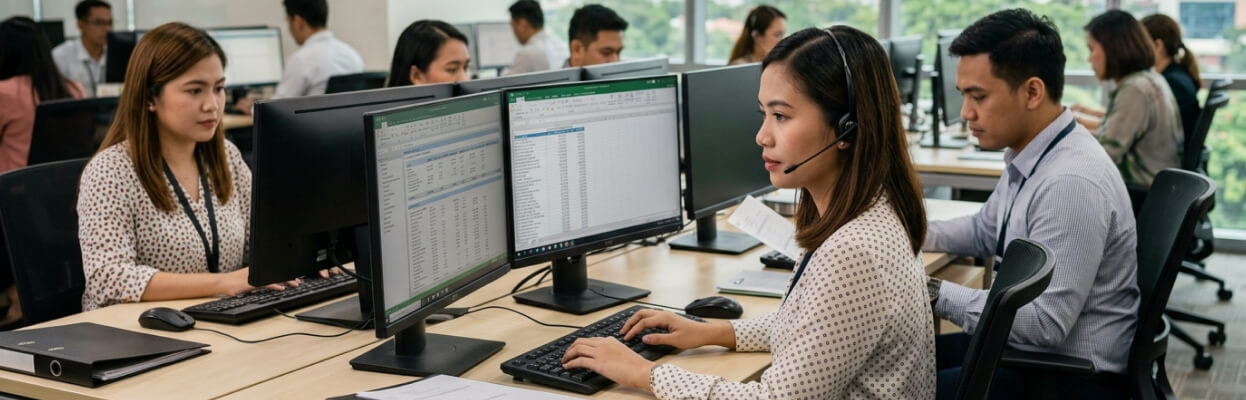
Why US Startups Are Rapidly Shifting Bookkeeping Operations to the Philippines
The Quiet Financial Shift Reshaping American Startups
Something changed over the last few years in the startup world. Quietly at first. Then all at once.
Founders stopped asking whether offshore bookkeeping was “safe” and started asking which offshore accounting partner they should hire.
That’s a massive psychological shift.
A decade ago, outsourcing bookkeeping to the Philippines was viewed as a budget survival tactic. Today, it’s increasingly treated as a standard operational strategy for startups trying to:
- Preserve runway
- Improve financial reporting accuracy
- Reduce operational overhead
- Scale leaner teams faster
- Free founders from administrative work
- Build investor-ready financial systems earlier
And the numbers back it up.
Recent industry reports, startup finance surveys, and cloud accounting platform data show that nearly 47% of US startups now use some form of offshore accounting or bookkeeping support.
Even more telling?
The Philippines now handles an estimated 65% of outsourced startup bookkeeping work globally.
That doesn’t happen accidentally.
It happened because several major business and technology shifts collided at the same time:
- Rising labor costs across the United States
- Increased founder pressure to extend the startup runway
- Massive improvements in cloud accounting software
- Better offshore accounting infrastructure
- AI-powered bookkeeping automation
- Widespread adoption of remote work after COVID
- Faster acceptance of distributed finance teams
- Improved global collaboration tools like Slack, Zoom, Loom, and QuickBooks Online
The result is a bookkeeping outsourcing boom that’s fundamentally changing how startups manage finance operations.
And honestly, most founders still underestimate how significant this shift really is.
Because the change isn’t just about bookkeeping anymore.
It’s about:
- Capital efficiency
- Operational scalability
- Founder productivity
- Investor confidence
- Financial visibility
- Business survivability in a tighter economy
That’s the real story behind the offshore bookkeeping boom.
Why Outsourced Bookkeeping Philippines Services Are Exploding
Let’s get one thing clear immediately.
This isn’t simply about finding “cheap labor.” That explanation is lazy and outdated.
If offshore bookkeeping only worked because it was inexpensive, the model would have collapsed years ago under quality issues, compliance failures, and operational chaos.
Instead, the opposite happened.
- The quality improved.
- The systems improved.
- The communication improved.
And now startups are moving accounting operations offshore because the model genuinely works.
The Real Drivers Behind The Growth
1. US Startup Burn Rates Are Under Pressure
Early-stage startups are operating in a much harsher funding environment than they were during the ultra-low interest rate years.
Investors became more cautious.
Capital became pricier.
Profitability suddenly mattered again.
That forced founders to reevaluate every recurring operational expense—including finance and accounting.
Here’s the reality:
| Expense Category | Average US Cost | Offshore Philippines Cost |
| Full-Time Bookkeeper | $50,000–$65,000/year | $8,000–$15,000/year |
| Fractional Bookkeeping Support | $2,500–$5,000/month | $500–$2,000/month |
| Payroll & Benefits | High | Minimal |
| Office Overhead | High | None |
| Scalability | Limited | Flexible |
The savings are substantial.
But the bigger advantage is flexibility.
A startup may only need the following:
- 5 hours of bookkeeping work per week
- Month-end reconciliation
- Investor-ready reports
- Accounts payable management
- Payroll coordination
Hiring a full-time US employee for that workload rarely makes financial sense.
Offshore bookkeeping gives startups variable capacity instead of fixed payroll.
That’s an entirely different economic model.
2. Cloud Accounting Software Changed Everything
Five years ago, offshore bookkeeping carried more operational risk.
Now?
Modern accounting infrastructure has dramatically reduced friction.
Today’s startup bookkeeping ecosystem includes the following:
- QuickBooks Online
- Xero
- Dext
- Expensify
- Gusto
- Ramp
- Brex
- Stripe integrations
- AI categorization tools
- Automated bank feeds
These systems create a centralized, real-time accounting environment accessible from anywhere in the world.
A founder in Austin and a bookkeeping team in Manila can simultaneously review:
- Transactions
- Expense reports
- Revenue categorization
- Cash flow statements
- Payroll records
- Financial dashboards
That level of visibility simply didn’t exist years ago.
And it changed the founder’s confidence dramatically.
3. Remote Work Normalized Distributed Teams
COVID permanently altered business psychology.
Before 2020, many founders still believed finance staff needed to sit physically inside an office.
Now?
Entire companies operate remotely.
Engineering teams are distributed.
Marketing teams are distributed.
Operations teams are distributed.
By then, hiring a bookkeeper in the Philippines had become perfectly normal.
The location mattered less than the following:
- Responsiveness
- Accuracy
- Security
- Process maturity
- Software integration
That cultural normalization accelerated the adoption of offshore bookkeeping faster than most people realize.
Why The Philippines Became The Global Leader In Offshore Bookkeeping
Many countries offer outsourcing services.
But the Philippines became dominant for specific reasons that directly align with startup needs.
English Fluency Creates Operational Efficiency
This aspect is constantly underestimated.
Bookkeeping requires precision communication.
Misunderstanding accounting terminology creates real financial risk.
Philippines-based accounting professionals generally possess the following:
- Strong written English
- Familiarity with US business language
- Experience with Western clients
- Comfortable asynchronous communication habits
That reduces operational friction significantly.
A founder should not need to spend 3 hours clarifying transaction categories because of communication gaps.
The Philippines built an outsourcing ecosystem specifically around solving that problem.
Strong Accounting Education Pipeline
The Philippines has spent decades building a large professional workforce for the following:
- Accounting
- Financial services
- Business process outsourcing (BPO)
- Administrative operations
Universities consistently produce accounting graduates trained in:
- Financial reporting
- Bookkeeping standards
- Tax documentation
- ERP systems
- International business communication
This matters more than people think.
Startups are not hiring random freelancers anymore.
They’re increasingly hiring trained accounting professionals operating within structured firms.
Time Zone Advantages Create Faster Turnaround
The time difference between the US and the Philippines can actually become an operational advantage.
For example:
| US Time Zone | Philippines Relationship |
| Eastern Time | +12 to +13 hours |
| Central Time | +13 to +14 hours |
| Pacific Time | +15 to +16 hours |
This arrangement allows for an overnight workflow completion.
A founder can:
- Upload financial documents at the end of the day
- Sleep
- Wake up to reconciled accounts and updated books
Not every startup leverages this effectively.
But the operational potential is significant.
The economics of offshore bookkeeping are more sophisticated than commonly understood.
Most people oversimplify the financial case.
They assume startups outsource bookkeeping only because labor costs are lower.
That’s incomplete.
The real value comes from a combination of factors.
Founders Recover High-Value Time
This is probably the biggest hidden ROI.
Founders spending:
- 10–15 hours monthly on bookkeeping
- Expense categorization
- Invoice reconciliation
- Payroll management
- Tax prep organization
…are burning time that we should spend on:
- Revenue growth
- Product development
- Investor relations
- Customer acquisition
- Strategic partnerships
The opportunity cost becomes enormous.
Example:
| Founder Activity | Estimated Value |
| Bookkeeping admin work | Low leverage |
| Sales calls | High leverage |
| Product decisions | High leverage |
| Fundraising | High leverage |
| Hiring | High leverage |
Outsourced bookkeeping services in the Philippines were effective by refocusing the founder.
And in startups, focus is currency.
Offshore Bookkeeping Improves Financial Visibility
Ironically, many startups end up with cleaner books offshore than they had internally.
Why?
This is because founders are often inconsistent with bookkeeping.
They delay categorization.
They ignore reconciliation.
They postpone the cleanup until tax season.
Professional offshore accounting teams operate with structured SOPs.
That consistency creates the following:
- Faster month-end closing
- Cleaner financial statements
- Better investor readiness
- More accurate cash flow visibility
This becomes critical once startups pursue the following:
- Venture capital
- Loans
- Due diligence
- Mergers
- Expansion
Messy books kill deals.
Clean books accelerate them.
What Changed In 2024
This phase is where the industry really evolved.
The offshore bookkeeping model today looks very different from the outsourcing model of 2018 or 2019.
AI Automation Reduced Manual Work
Modern bookkeeping increasingly combines the following:
- Automation
- AI categorization
- Human review
- Exception handling
Instead of manually entering every transaction, systems now automate much of the repetitive work.
Examples include:
- Receipt scanning
- Auto-categorization
- Invoice matching
- Duplicate detection
- Bank synchronization
That shifted offshore bookkeeping toward higher-value financial operations.
Today’s offshore accounting teams spend more time on the following:
- Reconciliation
- Reporting
- Financial organization
- Process improvement
- Compliance support
And spend less time doing pure data entry.
That’s a giant evolution.
Offshore Accounting Firms Became More Professionalized
The “Wild West” phase of offshore bookkeeping is fading.
Serious providers now operate with the following:
- Standard operating procedures
- Dedicated account managers
- Security protocols
- Staff training systems
- Quality assurance teams
- Cloud infrastructure
- US accounting specialization
Many firms now support:
- SaaS startups
- E-commerce brands
- Agencies
- Healthcare businesses
- Real estate firms
- Service companies
That specialization improves service quality significantly.
Security Standards Improved Dramatically
Security concerns remain valid.
But mature offshore bookkeeping firms now commonly implement the following:
- VPN access
- Encrypted systems
- Role-based permissions
- Multi-factor authentication
- SOC 2-aligned practices
- Secure cloud accounting environments
The conversation shifted from
“Is offshore bookkeeping dangerous?”
To:
“Which provider has the best security infrastructure?”
That market has a different level of maturity.
The Startup Psychology Shift
This shift may actually be the most significant change of all.
Using offshore bookkeeping is no longer considered a way to save money.
In startup communities, it’s increasingly viewed as an operational discipline.
Founders now openly discuss:
- Which offshore accounting firms do they use
- How much runway did they save
- Which automation stacks work best
- Which bookkeeping systems integrate cleanly with investors
Venture capital firms are seeing the same trend.
Many investors now favour lean accounting operations, rather than bloated internal finance teams, in the early stages.
That cultural acceptance accelerated adoption massively.
Key Takeaways
The offshore bookkeeping boom is real
Nearly half of US startups now use offshore accounting support in some capacity.
The Philippines dominates the market for clear reasons
Its combination of:
- English fluency
- Accounting talent
- lower operational costs
- remote work infrastructure
- startup specialization
…created a strong competitive advantage.
The value goes beyond cost savings
The real benefits include:
- Founder time recovery
- Better financial visibility
- Scalable operations
- Investor readiness
- Operational flexibility
AI and automation changed the economics
Modern offshore bookkeeping combines the following:
- Software automation
- AI tools
- Human accounting expertise
That dramatically improved efficiency and reduced failure rates.
Startup culture normalized offshore finance teams
Remote work permanently changed how founders think about operational staffing.
Location matters less.
Execution matters more.

The Real Risks, Mistakes, And Operational Realities Behind Offshore Bookkeeping
Offshore Bookkeeping Is Not “Set It And Forget It”
Let’s clear something up immediately.
Outsourcing bookkeeping to the Philippines absolutely works. Thousands of US startups already rely on it.
But it does not work automatically.
That’s where founders get burned.
They assume:
- Hiring offshore instantly fixes financial operations
- Lower cost automatically means better efficiency
- Any bookkeeping provider with a polished website is legitimate
- Automation removes the need for oversight
- Offshore bookkeeping is completely hands-off
That mindset creates operational problems fast.
Because bookkeeping is still finance. And finance punishes sloppy systems faster than almost anything else inside a startup.
The companies succeeding with offshore bookkeeping are usually doing five things well:
| What Successful Startups Build | Why It Matters |
| Clear systems | Prevents reporting confusion |
| Structured onboarding | Aligns workflows early |
| Strong communication | Reduces costly mistakes |
| Accountability processes | Maintains consistency |
| Financial visibility | Keeps leadership informed |
That’s the real difference.
Not “cheap labor.” Operational discipline.
The Biggest Offshore Bookkeeping Mistakes Startups Make
Most offshore bookkeeping failures follow predictable patterns.
Not random ones.
1. Hiring Based Purely On Price
This is probably the most common mistake founders make.
They see:
- $300/month bookkeeping
- “Full-service accounting”
- Unlimited transactions
- QuickBooks support
And they immediately assume they found a bargain.
Usually, they found future cleanup work.
Because ultra-cheap bookkeeping often comes with:
- Overloaded staff
- Weak training
- Minimal oversight
- No quality control
- Poor communication
- Generic workflows
At first, everything looks fine.
Then six months later:
- Transactions are miscategorized
- Revenue reports are inaccurate
- Cash flow projections stop making sense
- Tax prep becomes painful
- Investor due diligence gets messy
Now the founder has to clean up months of broken reporting.
The “cheap” option suddenly becomes expensive.
What Smart Founders Actually Evaluate
| Evaluation Area | What Mature Founders Look For |
| Operational maturity | SOPs, workflows, QA systems |
| Software stack | QuickBooks, Xero, Dext, Ramp, Gusto |
| Startup experience | SaaS, e-commerce, agencies, VC-backed firms |
| Communication | Slack, Loom, escalation systems |
| Security | MFA, VPNs, access controls |
Experienced founders do not choose bookkeeping partners based on the lowest monthly fee alone.
They evaluate operational reliability.
2. Weak Onboarding Creates Long-Term Chaos
This stage is where many offshore bookkeeping relationships quietly fail.
Founders rush onboarding. Then blame the provider later.
But bookkeeping teams are not mind readers.
They need context.
Especially startups. This is because early-stage operations are usually messy behind the scenes.
Strong Onboarding Usually Includes
Financial process documentation
- Revenue structure
- Expense categories
- Payroll schedules
- Vendor workflows
Software access
- Accounting systems
- Banking visibility
- Expense platforms
- Payroll tools
Recorded walkthroughs
- Loom videos
- SOP documentation
- Workflow maps
- Screen recordings
Why does this matter?
Because async communication works better when offshore teams can reference clear documentation instead of constantly chasing clarification.
The First 30 Days Matter More Than Founders Realize
Most bookkeeping relationships stabilize after the following:
- 30–60 days
- Workflow refinement
- Reporting adjustments
- Communication alignment
But many founders panic too early.
The first month usually includes:
- Categorization corrections
- Chart of accounts cleanup
- Reporting revisions
- Process optimization
That’s normal.
What matters is whether the provider improves systematically.
The Security Conversation: Legitimate Concerns vs. Fear-Based Assumptions
This topic matters.
Financial data is sensitive. Founders should take security seriously.
But some offshore bookkeeping discussions become irrational quickly.
Legitimate Security Concerns
These concerns are real:
- Weak password management
- Poor data storage practices
- Unsecured devices
- Lack of encryption
- Unauthorized access
- Employee turnover risks
But here’s the reality.
Those risks exist whether the bookkeeping team is:
- In Manila
- In New York
- In Texas
- Or inside your office
Geography does not determine security quality.
Processes do.
What Reputable Offshore Firms Now Implement
| Security Area | Common Protections |
| Infrastructure | VPNs, MFA, encrypted systems |
| Access control | Role-based permissions, audit trails |
| Device security | Restricted devices, monitored access |
| Internal policies | NDAs, retention rules, security SOPs |
Some offshore firms honestly operate with stronger security systems than small local accounting offices.
That surprises founders at first.
Then they see the processes firsthand.
IRS Compliance: What Founders Need To Understand
This question comes up constantly.
“Will the IRS care if my bookkeeping is offshore?”
Short answer? No.
The IRS cares about:
- Accuracy
- Documentation
- Compliance
- Audit readiness
If your bookkeeping is
- Organized
- Reconciled properly
- Tax-ready
- Financially accurate
…then geography becomes irrelevant.
What Actually Matters For Compliance
| Priority Area | Why It Matters |
| Clean records | Reduces reporting errors |
| Accurate categorization | Improves tax accuracy |
| Proper reconciliation | Prevents financial inconsistencies |
| Organized documentation | Supports audits and CPA work |
The bookkeeping team handles operational finance.
Your CPA still handles:
- Tax planning
- Filing strategy
- Compliance interpretation
- Regulatory guidance
That division of responsibility is completely normal.
The Hidden Operational Problems Nobody Talks About
This phase is where offshore bookkeeping becomes real-world instead of marketing copy.
Communication Delays
Offshore teams are often asynchronous.
That means:
- Replies may not be immediate
- Real-time meetings can be limited
- Some issues get resolved overnight instead of instantly
Founders who expect constant synchronous communication usually struggle.
The founders who succeed adapt by using the following:
- Slack threads
- Loom videos
- Detailed instructions
- Weekly reporting systems
- Clear workflows
Cultural Communication Differences
This issue is subtle. But important.
Some offshore staff initially avoid direct disagreement because they’re trying to be respectful.
That can create:
- Assumptions
- Miscommunication
- Incomplete execution
Strong firms solve this through:
- Escalation systems
- Structured reviews
- Documentation standards
- Dedicated account managers
Founders still need to encourage open communication aggressively.
Founder Micromanagement
Ironically, some founders create their own bookkeeping problems.
They outsource finance operations…
…then continue reviewing every transaction manually.
That destroys scalability.
Micromanagement Usually Looks Like This:
| Founder Behavior | Operational Result |
| Constant overrides | Workflow disruption |
| Rechecking every category | Slow reporting cycles |
| Daily interruptions | Team inefficiency |
| Refusing delegation | Operational bottlenecks |
Trust matters.
Oversight matters too.
But micromanagement quietly breaks operational efficiency.
What High-Performing Offshore Bookkeeping Relationships Look Like
The strongest offshore bookkeeping setups usually follow similar patterns.
They use clear workflow systems.
Successful startups implement the following:
- Standardized approvals
- Expense policies
- Monthly close schedules
- Reporting timelines
- Documentation standards
The bookkeeping team operates inside systems. Not chaos.
They Automate Aggressively
Strong finance operations automate:
- Bank feeds
- Receipt uploads
- Invoice syncing
- Payroll exports
- Expense categorization
The offshore team focuses on:
- Reconciliation
- Cleanup
- Reporting
- Exception handling
That combination works extremely well.
They Maintain Financial Visibility
Good outsourcing does not remove founder awareness.
It removes operational burden.
Founders still review:
- Monthly financial reports
- Cash flow statements
- Burn rate analysis
- Revenue trends
- Expense patterns
That visibility matters more as startups scale.
The Startup Case Study: How One SaaS Founder Fixed Operational Chaos
A SaaS founder in California managed bookkeeping internally for almost eighteen months.
Initially, it seemed manageable.
Then growth accelerated.
Suddenly:
- Stripe revenue increased
- Vendor payments multiplied
- Payroll complexity increased
- Subscription tracking became messy
Bookkeeping kept getting delayed because product issues always felt more urgent.
Eventually:
- Financial reports were months behind
- Investors requested updated numbers
- Tax preparation became chaotic
- Burn rate visibility disappeared
The company shifted to a Philippines-based bookkeeping firm specializing in SaaS startups.
The Onboarding Process Included
| Phase | Actions Taken |
| Documentation | Workflow mapping and SOP creation |
| Cleanup | Chart of accounts restructuring |
| Automation | Stripe reconciliation setup |
| Reporting | Revenue recognition refinement |
The first month was rough.
There were:
- Communication gaps
- Reporting revisions
- Workflow corrections
But by month three:
- Financial reporting stabilized
- Month-end close became consistent
- Investor reporting improved
- Founder time recovered
Most importantly, bookkeeping stopped feeling like emergency cleanup work.
It became operational infrastructure.
That’s the shift mature startups eventually make.
How To Vet A Philippines-Based Bookkeeping Firm Properly
Most founders ask the wrong questions.
Instead of asking:
“How cheap are you?”
Ask better operational questions instead.
Operational Questions
- What accounting software do you specialize in?
- How do you manage month-end closing?
- What’s your reconciliation process?
- How do you document workflows?
Security Questions
- Do you enforce MFA?
- How do you secure financial access?
- What are your internal security policies?
- Are devices company-managed?
Staffing Questions
- Is work handled by one person or a team?
- What happens during staff turnover?
- Do you assign account managers?
- How is quality reviewed internally?
Startup Experience Questions
- Have you worked with SaaS companies?
- E-commerce brands?
- Venture-backed startups?
- Multi-state businesses?
Specific experience matters more than most founders realize.
The Offshore Bookkeeping Market Is Maturing Fast
The industry today looks very different from a decade ago.
The old outsourcing stereotype of
- Random freelancers
- Poor communication
- Inconsistent quality
- Chaotic operations
…is becoming outdated.
Today’s stronger offshore bookkeeping firms now operate with the following:
- Dedicated finance teams
- Automation infrastructure
- Security frameworks
- Startup specialization
- AI-assisted workflows
- Structured operational systems
And founders are responding accordingly.
Because once bookkeeping becomes
- Reliable
- Scalable
- Affordable
…it stops feeling like outsourcing.
It simply becomes a smart operational design.
Key Takeaways
| Key Insight | Reality |
| Offshore bookkeeping works | But only with structured systems |
| Cheapest providers create risk | Cleanup costs often become expensive |
| Security depends on process | Not geography |
| Strong onboarding matters | Weak onboarding creates long-term problems |
| Offshore finance is now mainstream | Better software and workflows changed the industry |
The startups succeeding with offshore bookkeeping are not outsourcing blindly.
They are building disciplined financial operations designed to scale.

The Future of Offshore Bookkeeping, AI Disruption, And The New Startup Finance Model
This Is No Longer Just Outsourcing—It’s Infrastructure
If Part 1 was about the shift and Part 2 about the operational realities, Part 3 is about where this is heading.
This is because offshore bookkeeping is no longer just a cost-saving decision.
It’s becoming part of the financial infrastructure of modern startups.
That’s a very different conversation.
What used to be:
“Should we outsource bookkeeping?”
Has quietly become:
“How do we design a scalable finance system using automation, AI, and offshore execution?”
That shift matters.
And it’s accelerating faster than many founders realize.
The Future of Offshore Bookkeeping Is Hybrid, Not Fully Offshore
One of the biggest misconceptions is that offshore bookkeeping is an all-or-nothing decision.
It isn’t.
The strongest startups are now building hybrid finance operations.
That means:
- Automation handles repetitive work
- Offshore teams handle execution and maintenance
- US-based experts handle strategy and compliance
This creates layered operational coverage instead of relying on one overloaded person.
The Modern Startup Finance Stack
| Finance Layer | Primary Function |
| Automation Layer | Bank feeds, receipt scanning, payroll syncing |
| Offshore Execution Layer | Reconciliation, bookkeeping, reporting prep |
| Strategic Finance Layer | Forecasting, tax planning, investor reporting |
This separation of responsibilities is intentional.
And increasingly, it’s becoming the standard operating model for scaling startups.
AI Is Not Replacing Offshore Bookkeeping — It’s Reshaping It
There’s a lot of noise around AI replacing accountants.
That’s not really what’s happening.
What’s actually happening is role compression.
AI removes repetitive work. Humans move closer to judgment, oversight, and financial decision support.
What AI Already Handles
Modern bookkeeping systems already automate the following:
- Transaction categorization
- Receipt extraction
- Duplicate detection
- Invoice matching
- Expense classification
- Data validation checks
Tasks that used to consume hours now happen in seconds.
What Humans Still Handle
Even with AI, experienced finance professionals are still needed for the following:
- Exception handling
- Revenue recognition review
- Compliance verification
- Month-end reconciliation oversight
- Financial judgment calls
- Investor reporting accuracy
This area is where offshore bookkeeping teams now operate.
Not as data-entry support.
We are financial operators who manage systems at scale.
The Economic Shift Happening Right Now
| Old Model | Emerging Model |
| More labor equals higher cost | Automation + offshore review = lower total cost |
| Manual bookkeeping | Automated financial workflows |
| Large accounting teams | Lean distributed finance systems |
| Slow reporting cycles | Faster operational visibility |
That combination is why offshore bookkeeping is becoming stronger, not weaker, in the AI era.
Why Investors Now Prefer Lean Finance Operations
Something remarkable happened over the past few years.
Investors stopped viewing offshore bookkeeping as risky by default.
Many now view it as operationally smart.
Why?
Because investors care about:
- Burn rate efficiency
- Financial visibility
- Operational discipline
And offshore bookkeeping directly impacts all three.
What Investors Actually Evaluate
When investors review startup finance operations, they usually ask the following:
- Are the books current?
- Is revenue tracked accurately?
- Is spending categorized correctly?
- Is reporting consistent?
- Does leadership understand burn rate clearly?
It does not matter whether the bookkeeping team is
- In New York
- In Manila
- Or fully remote
What matters is whether the system is reliable.
The New Reality: “Clean + Lean” Wins
| Traditional Setup | Lean Offshore Setup |
| $4,000/month local bookkeeping | $1,200/month offshore support |
| Higher fixed overhead | Flexible operational cost |
| Slower scaling | Faster scalability |
| Manual-heavy workflows | Automation-supported workflows |
If reporting quality is identical, investors increasingly prefer the leaner operational structure.
That shift is subtle.
But it’s important.
The Rise of Fully Distributed Finance Teams
Startups are no longer building finance departments the old way.
The centralized accounting model is slowly fading.
Instead, companies are building distributed finance systems.
Typical Modern Startup Finance Structure
| Role | Primary Responsibility |
| Founder / CEO | Oversight and strategic decisions |
| Offshore bookkeeping team | Day-to-day financial execution |
| Fractional CFO | Forecasting and investor readiness |
| Automation tools | Data processing and workflow automation |
| CPA / Tax strategist | Compliance and tax planning |
This approach is not a temporary trend.
It’s becoming the default operating structure for lean startups.
Why Distributed Finance Teams Work Better
Traditional accounting structures often create the following:
- Higher overhead
- Slower reporting
- Limited scalability
- Rigid staffing costs
Modern distributed systems create:
- Flexible capacity
- Faster reporting cycles
- Better automation integration
- Lower operational friction
- Easier scaling during growth phases
Startups need adaptability more than hierarchy.
That’s why this model keeps winning.
What Startups Should Automate Immediately
If a startup is still manually handling repetitive finance tasks in 2026, operational inefficiency usually follows.
Certain areas should already be automated.
High-Impact Automation Areas
- Bank transaction syncing
- Expense categorization rules
- Receipt capture systems
- Invoice generation workflows
- Payroll integrations
- Subscription revenue tracking
- Expense approval workflows
These automations reduce operational drag dramatically.
Why Automation Makes Offshore Teams Stronger
Automation does not replace offshore bookkeeping teams.
It improves them.
Because instead of spending time on repetitive data entry, offshore finance teams can focus on:
- Financial review
- Reconciliation accuracy
- Reporting quality
- Compliance support
- Month-end close management
That’s significantly higher-value work.
And the outcomes are usually better because of it.
The Long-Term Economics Behind This Shift
The offshore bookkeeping model keeps expanding for one simple reason:
It scales better than traditional hiring.
Traditional Hiring vs. Offshore + Automation
| Traditional Hiring | Offshore + Automation |
| Fixed salary costs | Variable cost structure |
| Higher overhead | Flexible scaling |
| Slower staffing adjustments | Faster onboarding and transitions |
| Limited flexibility | Easier workload management |
This aligns perfectly with startup behavior.
This is because startups rarely grow in a straight line.
Their finance systems shouldn’t be rigid either.
What Changes Over The Next 3–5 Years
Based on current market direction, several trends are becoming increasingly obvious.
1. Offshore Bookkeeping Becomes Standard
For many startups, offshore bookkeeping will become the following:
- The baseline
- Not the alternative
2. AI Handles Most Routine Data Work
AI will likely manage:
- 60–80% of repetitive bookkeeping tasks
Human teams will shift toward the following:
- Review
- Oversight
- Exception handling
- Financial interpretation
3. Finance Teams Become Smaller But More Skilled
The future finance team likely looks like:
- Fewer people
- Higher capability
- Stronger automation dependency
4. Real-Time Reporting Becomes Expected
Monthly close cycles continue shrinking:
- From 10–15 days
- Toward 2–5 days
Founders increasingly expect near-real-time financial visibility.
5. Hybrid Finance Systems Dominate
Purely local finance teams are becoming less common.
Purely offshore models also decline.
Hybrid systems become the dominant structure.
The Strategic Reality: This Is About Control, Not Cost
Many founders still think offshore bookkeeping is mainly about saving money.
That thinking is outdated.
The real value is:
- Financial control
- Reporting predictability
- Operational scalability
- Faster decision-making
- Reduced administrative friction
Cost savings still matter.
But they’re no longer the primary driver for mature startups.
Final Perspective: What This Shift Really Means
If you zoom out, startup finance is being redesigned in real time.
Rapidly.
We are moving from:
- Manual bookkeeping → automated workflows
- Local-only teams → distributed finance systems
- Full-time staffing → flexible operational capacity
- Delayed reporting → real-time visibility
And offshore bookkeeping in the Philippines now sits directly in the middle of that transformation.
This solution addresses a very specific startup problem:
How do you build high-quality financial operations without locking the business into high fixed costs?
For a growing number of startups, the answer is becoming increasingly clear.
Key Takeaways
| Key Insight | What It Means |
| Offshore bookkeeping is becoming infrastructure | Startups now treat it as part of core operations |
| AI is reshaping bookkeeping | Automation handles repetitive work while humans handle oversight |
| Lean finance systems are winning | Investors increasingly value operational efficiency |
| Distributed finance teams are becoming standard | Offshore execution + automation + strategic leadership |
| The shift is long-term | This is structural, not temporary |
The future of startup finance is not fully offshore.
And it’s not fully local either.
It’s integrated. Automated. Distributed. And increasingly global.
Frequently Asked Questions (FAQ)
1. Is offshore bookkeeping in the Philippines legally compliant for US startups?
Yes. Completely.
Here’s the reality: the IRS does not care where your bookkeeping team sits. Manila, New York, Austin—all irrelevant.
What matters is whether the books are accurate, organized, and compliant when it is important.
That means:
- Clean financial records
- Proper transaction categorization
- Consistent reconciliations
- CPA-ready reporting
Most experienced Philippine bookkeeping teams already work inside US GAAP-aligned systems and coordinate directly with US-based CPAs. This is the standard operating procedure now, not some risky workaround.
2. How secure is outsourcing bookkeeping to the Philippines?
Security is about process. Not geography.
A poorly managed local finance team can create just as much risk as a subpar offshore vendor. Sometimes more.
Strong offshore bookkeeping firms typically operate with:
- Multi-factor authentication (MFA)
- VPN-secured access
- Role-based permissions
- Encrypted file sharing
- Audit tracking systems
The real problems usually come from weak controls, shared logins, and founders choosing the cheapest provider they can find.
That’s where things break.
A disciplined offshore team with proper systems can absolutely match — or outperform — the security standards of many in-house finance departments.
3. How much does offshore bookkeeping in the Philippines cost?
Usually far less than building the same function internally.
Typical ranges:
- Early-stage startups: $500–$1,200/month
- Growth-stage companies: $1,200–$2,500/month
- High-volume SaaS or e-commerce businesses: $2,500+/month
Pricing depends on:
- Transaction volume
- Revenue complexity
- Payroll structure
- Reporting requirements
- Software integrations
But here’s what most founders eventually realize. The savings are only part of the equation.
The bigger win is operational scalability without carrying the overhead of a full in-house accounting team.
Different levels of leverage.
4. What bookkeeping tasks can offshore teams handle?
Far more than basic data entry.
That assumption is outdated.
Experienced offshore bookkeeping teams regularly manage:
- Reconciliations
- Accounts payable and receivable
- Expense tracking
- Payroll support
- Monthly reporting
- Cash flow monitoring
- Financial cleanup work
Some also support:
- E-commerce bookkeeping
- SaaS revenue recognition
- Multi-entity reporting
The strongest offshore teams operate as if they are part of the finance department itself. Quietly keeping the numbers clean while leadership focuses on growth.
That operational stability matters more than most startups realize.
5. Can offshore bookkeepers work with US accounting software?
Yes. Most already specialize in it.
Common platforms include:
- QuickBooks Online
- Xero
- NetSuite
- FreshBooks
- Bill.com
- Gusto
- Stripe
- Shopify
For many offshore bookkeeping firms, these systems are part of the daily workflow.
Honestly, some offshore teams know these platforms better than the companies hiring them.
6. How do communication and time zones work?
Better than most founders expect.
The old offshore communication horror stories? Many are outdated.
Most established bookkeeping providers already support overlapping US business hours through:
- Slack communication
- Zoom meetings
- Dedicated account managers
- Weekly reporting updates
- Fast response times
In practice, offshore teams are often more responsive because remote support is already built into their operating model.
Clear systems. Faster follow-through. Less chaos.
7. How long does onboarding usually take?
Usually, it takes one to four weeks.
Depends on how clean the books are coming in.
And let’s be honest — many startups think their books are organized until someone actually reviews them properly.
Most onboarding includes:
- Financial review
- System setup
- Workflow alignment
- Chart of accounts review
- Initial reconciliation cleanup
Good onboarding prevents bigger reporting problems later. Bad onboarding creates months of operational friction.
Founders often learn this lesson the hard way.
8. Will offshore bookkeeping affect tax filing or CPA work?
Usually, it improves it.
Clean books reduce tax-season panic. Simple as that.
Strong offshore bookkeeping teams provide:
- Accurate monthly financials
- Organized transaction records
- Reconciliation reports
- CPA-ready documentation
Many US CPAs already work directly with offshore bookkeeping providers because it reduces correction work, backtracking, and unnecessary cleanup before filing deadlines.
Cleaner books save time. And money.
9. What are the biggest mistakes startups make when outsourcing bookkeeping?
Choosing based on price alone.
That mistake repeats itself constantly.
Cheap providers often create the following:
- Reporting inconsistencies
- Delayed reconciliations
- Security gaps
- Poor communication
- Financial inaccuracies
Another common mistake? Waiting too long to fix broken financial operations.
Small bookkeeping problems do not stay small as companies scale. They compound quietly in the background until reporting becomes unreliable and cleanup becomes expensive.
That’s usually when leadership finally pays attention.
10. Why are more US startups choosing Philippines-based bookkeeping teams?
Because the model works.
Not theoretically. Operationally.
Startups need:
- Lower operating costs
- Reliable financial reporting
- Scalable support
- Faster back-office execution
The Philippines continues to attract US companies because it offers the following:
- Strong English communication
- Deep outsourcing experience
- Familiarity with US business culture
- Competitive operating costs
And over time, founders realize something important.
Offshore bookkeeping is no longer viewed as temporary administrative support.
For many startups, it has become part of the long-term finance strategy. Quietly. Permanently.
Resources
- IRS Small Business and Self-Employed Tax Center – Official IRS guidance for bookkeeping, tax compliance, and financial recordkeeping.
- U.S. Small Business Administration (SBA) – Resources for startup finance management, business operations, and growth planning.
- QuickBooks Online is accounting software commonly used by startups and bookkeeping teams.
- Xero – Cloud-based accounting platform for bookkeeping and financial reporting.
- NetSuite – ERP and accounting software for scaling and multi-entity businesses.
- Bill.com – Platform for accounts payable, invoices, and payment automation.
- Gusto – Payroll and HR platform widely used by US startups.
- Stripe – Payment infrastructure platform for SaaS and e-commerce companies.
- Shopify – an e-commerce platform integrated with bookkeeping and reporting systems.
- American Institute of Certified Public Accountants (AICPA) – Accounting standards, compliance guidance, and financial reporting resources.
- Kinetic Innovative Staffing – Offshore staffing and bookkeeping support solutions for growing businesses.