
Why Philippine Remote IT Experts Should Be on Your Radar for Your Next Project?
Technology drives business success.
To stay competitive, businesses must effectively integrate Information Technology (IT) into their operations. This requires specialized professionals with advanced tech skills.
However, the high cost of local talent and a shortage of qualified candidates can make it challenging to staff IT departments.
Fortunately, outsourcing has emerged as a cost-effective solution, delivering high-quality work at more affordable rates. The Philippines has become a top destination for IT outsourcing, thanks to its skilled professionals and favorable business environment. Many companies now outsource IT support services to the country to maximize efficiency while keeping costs low.
In this article, we’ll explore why the country and its IT experts are the ideal choice for your next IT project.
#1 Why is hiring Filipino IT experts cost-effective?
Hiring IT professionals from the Philippines offers businesses significant savings on salaries and overhead without sacrificing quality, allowing companies to reinvest in growth while maintaining high technical standards.
Wages are closely tied to the cost of living, which covers basic expenses like housing, food, transportation, and healthcare.
Thanks to the lower cost of living in the Philippines, hiring skilled Filipino talent is much more economical than hiring similar talent in the U.S. or U.K.
According to livingcost.org, the cost of living in the U.S.(7th) and the U.K.(10th) is $2,433 and $2,293 respectively.
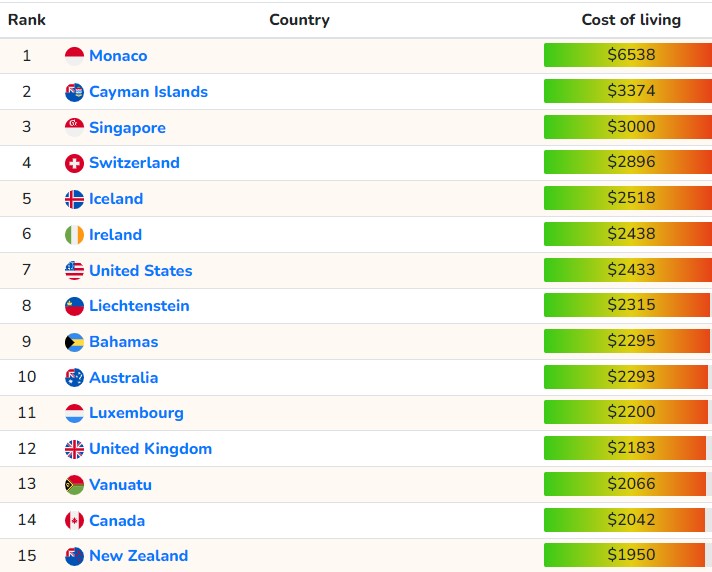
In the Philippines, it’s only $614.

This difference translates to substantial savings. A U.S. software developer now costs an average of $124,000 per year, while a highly experienced software developer in the Philippines earns around $27,500 annually — resulting in savings of up to 78%.
These competitive rates attract top IT talent, offering professionals a comfortable standard of living while pursuing their passion. Though lower than Western wages, these are among the highest in the country.
So you’re not paying for bargain workers. You’re securing highly skilled professionals at a lower cost due to the lower cost of living, not because of a lack of skill.
Large companies have already recognized this advantage. Accenture, for instance, has over 85,000 employees in the country, delivering top-tier services while maintaining a competitive edge.
Concentrix, another global leader, has also established a strong presence in the country, offshoring customer service and choosing to outsource IT support functions to achieve significant cost savings while maintaining high levels of customer satisfaction.
#2 What expertise do Filipino IT professionals bring to global projects?
Filipino IT specialists are trained in advanced technologies like cloud computing, cybersecurity, and software development, giving businesses access to top-tier skills at competitive rates.
Market leaders like Accenture and Concentrix recognized the value of the Filipino IT talent pool and made a smart move into the Philippine market.
While other countries face a shortage of local IT talent, the country consistently produces a strong supply of graduates.
With around 1,000 colleges and universities offering computer and technology degrees, many recognized as Centers of Excellence or Development, the country ensures a steady flow of skilled professionals.
The Philippine Software Industry Association reports that there are approximately 1.3 million highly skilled programmers, with new talent joining the workforce each year.
As a result, it has become a top destination for companies seeking a wide range of IT services.
Filipino IT professionals are recognized experts in various fields, including:
- Software Development
- Cybersecurity
- Cloud Computing:
- Network Management:
- Data Analytics
- Web Development
The nation’s IT professionals continually update their skills through both mandatory and voluntary training programs, ensuring they stay current with the latest technological advancements.
In addition to their degrees, many hold globally recognized certifications such as CISSP, AWS Certified Solutions Architect, PMP, OCP, CCNP, and CompTIA Cloud+.
Companies often send field experts from their headquarters to train their offshore teams, only to discover how quickly Filipinos master new competencies—setting the stage for even greater success.

#3 How does English fluency give Filipino IT experts an edge?
The Philippines ranks among the world’s top English-speaking countries, meaning remote IT teams can collaborate smoothly with international clients and avoid costly miscommunication.
Technology transcends borders, but English remains the global language of communication. Filipinos excel in adopting new technologies thanks to their strong language proficiency.
As one of the largest English-speaking nations, with English as an official language and the primary medium of instruction, the nation produces a workforce that is comfortable using English in professional settings.
The country ranks second in Asia, just behind Singapore, on the English Proficiency Index–a key international benchmark.
In 2018, the Philippines overtook India as the world’s largest offshore call center destination. But beyond call centers, clear communication is crucial for any successful collaboration. In virtual meetings, everyone must understand each other, or complex technical details can be lost, leading to errors, delays, and additional costs.
Filipino IT professionals are favored by countries like the United States because they can easily articulate ideas, provide feedback, and discuss complex technical concepts.
Their near-native fluency in both written and spoken English makes them ideal outsourcing partners.
While other regions may offer technical competence, international collaboration requires both technical skills and linguistic fluency. The country delivers this powerful combination of technically proficient, English-fluent, and cost-effective professionals—outperforming providers who offer only one or two of these strengths.
And this is just the beginning of what it has to offer.
#4 Why are Filipino IT professionals culturally compatible with global teams?
Shared business values, adaptability, and exposure to Western work environments make Filipino IT experts easy to integrate into diverse, multinational teams.
Language compatibility is one thing, and cultural compatibility is another. Speaking the same language doesn’t always mean true understanding.
Every culture has its own:
- Norms
- Communication styles
- Work expectations
- Leadership expectations
- Group dynamics.
The Philippines, with its deep historical ties to the United States, stands out in this regard. Having been under American rule for over half a century, the country has a strong connection to Western culture, customs, and expectations.
This affinity remains strong today, with Filipinos deeply familiar with Western media, movies, music, and news.
This shared cultural understanding creates a solid foundation for long-term IT collaborations. For example, when an American company wants to bring a software product to market, Filipinos intuitively understand the work expectations, focus, and speed required for the project.
There’s a natural resonance between work cultures, which plays a key role in building strong and effective working relationships.
#5 How does the Philippines’ time zone benefit global companies?
With overlapping work hours for Asia, Europe, and North America, Filipino IT teams can provide extended coverage and even 24/7 support when needed.
Worried about working across different time zones?
It’s a common concern.
But instead of being a drawback, different time zones can actually be an advantage.
Here’s why:
The Philippines, located in the GMT+8 time zone, shares the same time zone as major cities like Singapore, Hong Kong, and Beijing, and is just two hours behind Sydney, Australia–making it an ideal partner for businesses across the Asia-Pacific region.
Overlapping Hours: The overlap in work hours between the Philippines and countries like Australia allows for real-time collaboration.
When a company in Sydney starts at 9:00 AM, it’s 7:00 AM in Manila. This time alignment allows teams to hold meetings, discuss updates, and resolve issues in real time, as if they were in the same office.
24/7 Operations: For countries with less overlap, like those in North America, the time difference can become a strength.
When one team finishes its workday, they can hand off tasks to the other team, ensuring continuous progress and minimizing downtime.
This “follow the sun” model allows for round-the-clock operations, which is perfect for businesses needing constant development, support, or monitoring.
It boosts productivity, shortens project timelines, and expedite product launches.
By working with teams in different time zones, businesses can achieve faster results than their single-shift competitors.
With overlapping work hours or 24/7 operations, time zone differences become an asset, not a challenge.

#6 Are Filipino IT workers known for strong work ethic and reliability?
Yes — Filipino professionals are recognized worldwide for their dedication, professionalism, and consistency in delivering high-quality work on time.
While cost-efficiency is a key benefit of outsourcing Filipino talent, the true advantage lies in their exceptional work ethic and professionalism
They are globally recognized for their strong commitment to work, a trait deeply rooted in their culture.
They don’t just meet expectations; they often exceed them.
Filipino IT professionals are known for going the extra mile, often putting in additional hours to meet tight deadlines and achieve project goals. They’re willing to work night shifts and take full ownership of their tasks, ensuring they deliver top-quality results.
Kinetic stands behind Filipino workers because they’ve consistently delivered. Clients have shared their satisfaction:
“These professionals were crucial in providing solutions, demonstrating openness and commitment to delivering high-quality products. Our stress was minimized, and their skills exceeded our expectations.”
In a world of tight deadlines and rapid project cycles, having Filipino IT professionals on your team is invaluable. From day one, you’ll see their commitment to your goals, giving you the peace of mind that your projects are in capable hands.
#7 How does the Philippine government support the IT and outsourcing sector?
The government invests in digital infrastructure, training programs, and tax incentives, creating a reliable environment for offshore IT teams to thrive.
According to the Information Technology and Business Process Association of the Philippines (IBPAP), the **Philippine IT-BPM industry is projected to generate $42.3 billion in revenues by the end of 2025, contributing roughly 9.4% to the country’s GDP.
With the U.S. favoring the Philippines as a hub for high-quality IT-BPM services, the industry is set to grow even more, creating jobs and boosting the economy.
To ensure this growth, the Philippine government is fully committed to supporting the industry’s long-term stability and success.
Here’s how the government is aligning its efforts with the goals of various stakeholders:
Economic Incentives
The government offers a range of incentives to make the country an attractive outsourcing destination, including:
- Income Tax Holidays (ITH): New BPO companies enjoy a 4 to 6-year income tax holiday, depending on their location and operations.
- Reduced Corporate Income Tax: After the ITH, BPOs benefit from a reduced income tax rate of 5% of gross income.
- Import Duty Exemptions: BPOs in ecozones are exempt from duties on imported capital equipment and raw materials, lowering operational costs.
Legislative Support
Laws are in place to facilitate digital collaboration and support remote workers:
- Telecommuting Act (RA No. 11165): This law allows flexible work arrangements, enabling companies to offer telecommuting and retain talent within the country.
- Department of Information and Communications Technology Act (RA 10844): Establishes an agency to promote ICT development and ensure the population can use the latest technologies.
- Data Privacy Act (RA 10173): Protects sensitive data and aligns with international data security standards, building trust with foreign clients.
- Ease of Doing Business Act: Simplifies procedures, reduces permits, digitizes registration, and offers one-stop-shop services to attract foreign BPO operations.
Infrastructure Development
The government recognizes the importance of infrastructure in the industry.
Investments in fiber-optic networks and broadband expansion are enhancing the country’s digital infrastructure, with plans for even more improvements in the coming years.
The government has partnered with private telecom companies, international banks, and other stakeholders to bring high-speed, reliable internet across the country, enabling more remote workers to offer world-class services.
Training Programs
Understanding that people are its main asset, the government focuses on skills development:
- Partnerships with Educational Institutions: Aligning curricula with industry needs to ensure workers have the skills required by the market.
- TESDA: Provides training and certifications in essential outsourcing skills, producing a steady supply of qualified workers.
- Continued Skills Development: Promotes ongoing professional training, especially in dynamic fields like IT and digital services.
The government actively promotes the nation as a top outsourcing destination through international roadshows, trade missions, and global conferences.
This robust support from the government signals a strong, reliable environment for businesses looking to hire for both long-term and short-term projects.
#8 Can businesses easily scale IT teams in the Philippines?
Yes — companies can quickly expand or reduce their teams thanks to the Philippines’ large IT talent pool and flexible staffing models.
As business leaders, we often question our staffing decisions—Is the team too large or too small?
Hiring remote IT professionals offers the advantage of effortless scaling, allowing you to adjust staffing in real time without second-guessing.
Workforce Flexibility
Scalability is essential in today’s fast-paced business world, where project demands can shift rapidly. Outsourcing offers IT teams that can scale up or down with ease, making it possible for startups and small businesses even with just one remote staff member to compete effectively.
- Rapid Expansion: When a project requires more manpower, businesses can quickly access the country’s vast talent pool. Large numbers of developers, analysts, or support staff can be onboarded quickly, ensuring that even sudden, large-scale projects move forward without delays.
- Efficient Downsizing: Conversely, when a project wraps up or business needs change, companies can downsize their teams without the complexities of reducing an in-house staff. This flexibility helps control costs while maintaining the ability to ramp up when needed.
Beyond workforce size, on offer is a rich variety of IT skills to support projects at different stages.
Diverse Skill Sets
IT needs vary, and readily available are experts from a wide range of specializations, including software development, cybersecurity, data analytics, and network engineering. This diversity ensures that companies can find professionals with the exact skills required for any project, from building new applications to securing networks or analyzing big data.
After considering all these 8 factors, hiring Filipino IT staff becomes an obvious choice. Tapping into this talent pool gives companies access to a highly-skilled, versatile workforce capable of meeting a broad range of IT needs.
The cost-effectiveness of outsourcing to the Philippines is unmatched, allowing businesses to significantly reduce expenses without sacrificing quality. Moreover, the strong English proficiency and cultural compatibility of Filipino professionals ensure smooth collaboration with international clients.
With the government’s strong support for the sector and the scalability it offers businesses of any size, Filipino IT professionals are an unparalleled asset and a smart bet for outsourcing businesses.
FAQs
Q1. Why should companies hire Filipino remote IT experts?
Filipino IT experts combine strong technical skills, English fluency, and cultural compatibility with cost-effectiveness, making them an ideal choice for global businesses that need reliable offshore talent.
Q2. What IT roles can be outsourced to the Philippines?
Businesses commonly hire Filipino professionals for roles like software developers, cybersecurity analysts, cloud engineers, technical support, and IT project managers.
Q3. Is hiring offshore IT experts from the Philippines cost-effective?
Yes. Companies can save up to 60–70% on labor and overhead costs while still accessing highly skilled professionals trained in global IT standards.
Q4. How do Filipino IT specialists handle communication with international teams?
With high English proficiency and familiarity with Western work cultures, Filipino IT experts communicate clearly, making collaboration seamless across time zones.
Q5. Can businesses scale IT teams easily in the Philippines?
Yes. The Philippines offers a large talent pool and flexible staffing options, allowing companies to scale their teams up or down quickly based on project needs.
Q6. What makes the Philippines competitive in the IT outsourcing industry?
Government support, reliable digital infrastructure, and a highly educated workforce position the Philippines as one of the top global destinations for IT outsourcing.
Kinetic Innovative Staffing has over a decade of experience placing top-tier Filipino IT talent for international clients.
The skilled Filipino professionals at Kinetic exemplify the excellence available
Kinetic takes you by the hand, helps you hire the best workers, and makes the whole thing a breeze.
If this is something you would like to explore for your business, do not hesitate to contact us and we’ll give you the assistance you need.
Kinetic Innovative Staffing has been providing hundreds of companies in the Asia Pacific, North America, the Middle East, and Europe with professionals working remotely from the Philippines since 2013. Get in touch to know more.