
Imagine your business unlocking untapped potential, slashing costs, and skyrocketing efficiency in 2025—simply by embracing the right outsourcing trends.
The global outsourcing market is projected to reach over $850 billion in 2025, with continued strong growth expected. With competition intensifying, the need to stay ahead has never been greater. Embrace change now, or risk falling behind.
In this article, we’ll dive into the eight game-changing outsourcing trends that will reshape how businesses operate in 2025. Get ready to learn what’s on the horizon, so you can position your business for success and outpace the competition.
Trend 1: How AI and Human Collaboration Will Transform Your Business

Human expertise, working hand in hand with the latest in Artificial Intelligence is reshaping what’s possible in business.
Imagine a call center where chatbots handle thousands of customer queries every hour, responding instantly, accurately, and without a hint of fatigue. This is the reality of AI automation and it is significantly changing the game.
With AI, large corporations can scale and serve large numbers of customers without significant investments in manpower and training.
Tools like chatbots have taken over first-level customer support, handling everything from answering simple FAQs to troubleshooting. Robotic process automation (RPA) is dealing with repetitive workflows like data entry, and completing in seconds processes that used to take hours.
Meanwhile, human tech experts are busy with complex problem-solving, system optimization, and driving strategic innovation.
The result? Remote staffing providers are becoming faster, smarter, and better equipped to deliver value to client businesses.
The virtues of AI automation include:
- Cost Reduction: With AI, companies save on labor costs while maintaining quality output.
- Faster Turnaround Times: Tasks are performed quickly and consistently, meeting tight deadlines with ease.
- Scalability: Whether it’s scaling up during peak seasons or handling unexpected surges, AI-driven processes offer the flexibility businesses need.
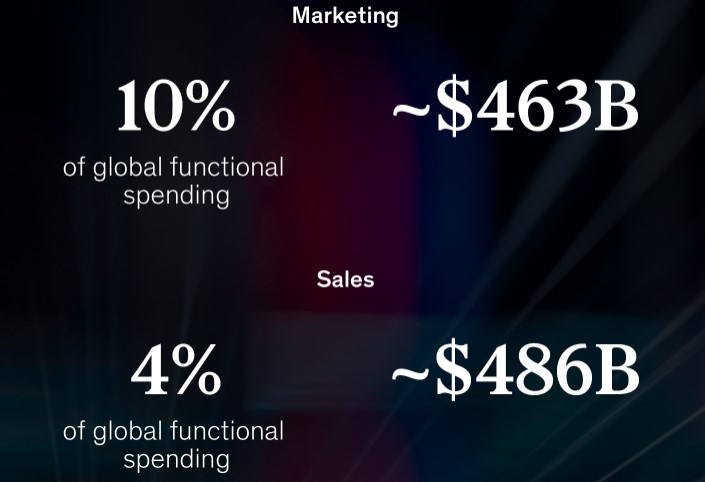
As a field, AI is itself rapidly evolving, with even more powerful capabilities going online. According to McKinsey, generative AI will significantly impact the different elements of business. McKinsey estimated that generative AI could boost marketing productivity worth about $463 billion annually
Because of these benefits, the use of AI in outsourcing will continue to be a trend in 2025
How To Adapt:
- Evaluate repetitive tasks in your business processes that can be automated using AI. Consider investing in chatbot solutions and other AI-powered tools.
- Enhance Decision-Making: Utilize AI-powered data analytics tools to provide insights, allowing employees to make more informed and faster decisions.
- Upskill Human Workforce: Focus on developing human skills in AI management, strategic oversight, and advanced problem-solving to maximize the potential of AI collaboration.
Case In Point: Amazon’s Smart Use of AI
Amazon has mastered the art of using AI to enhance its outsourced operations. Their AI-powered chatbots tackle millions of routine customer queries—think order tracking, returns, and FAQs—letting human agents focus on more complex issues.
The payoff? Shorter wait times, happier customers, and cost savings allow Amazon to reinvest in growth.
For businesses, the lesson is clear: integrating AI into outsourcing is a serious competitive advantage. By embracing automation, companies can elevate their operations, reduce costs, and stay ahead in an increasingly lightning-paced market.
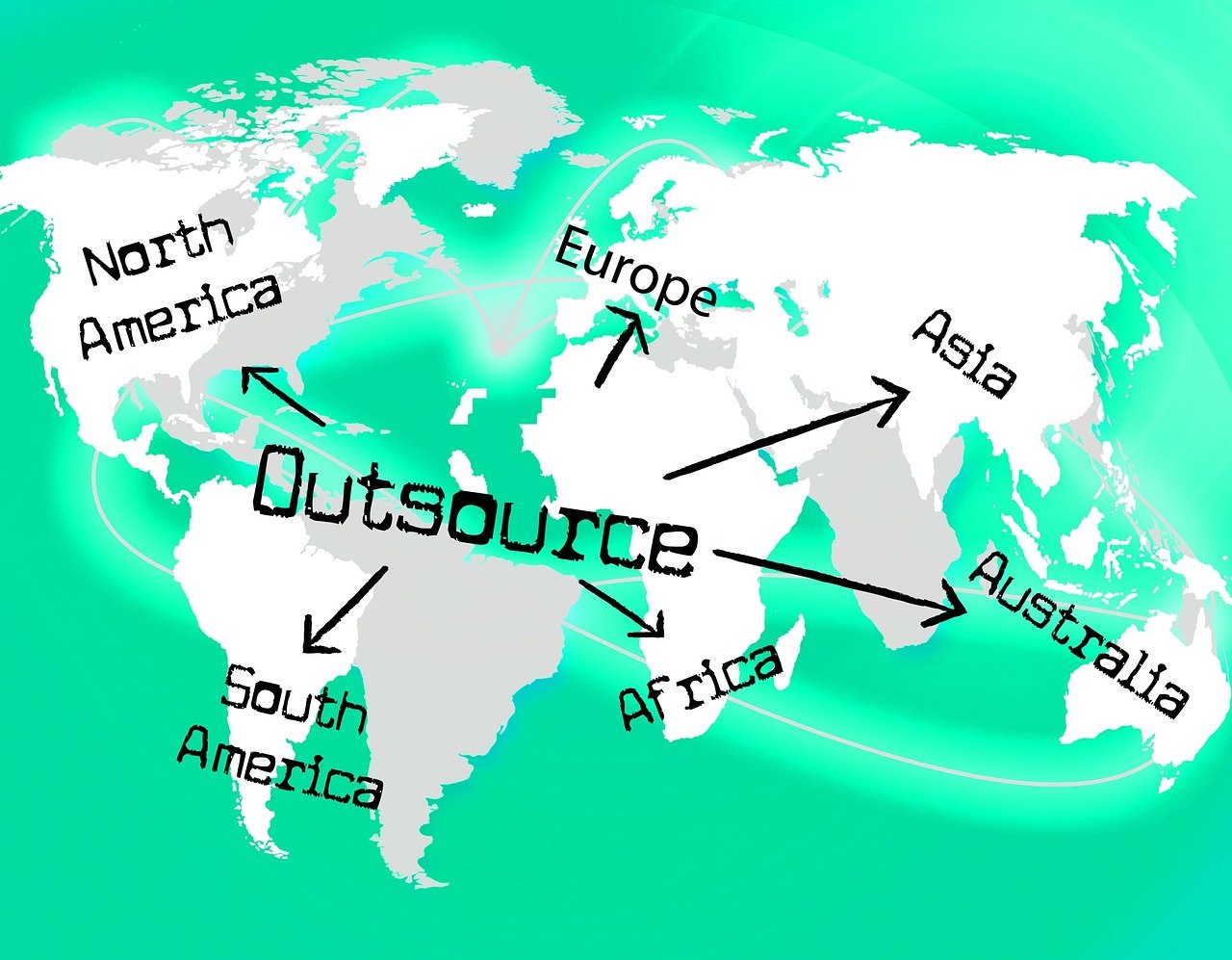
Trend 2: How Businesses Are Expanding Remote Work to New Geographies
The ongoing growth of remote work has eliminated geographical limitations for businesses. By leveraging outsourcing, companies can access a global talent pool of skilled professionals, allowing them to optimize costs while finding the best talent from anywhere in the world.
This trend is driven by a global talent shortage. Korn Ferry predicts that by 2030, there could be a global talent shortage of over 85 million people, potentially resulting in unrealized revenues exceeding $8.5 trillion globally. Outsourcing helps bridge this gap.
What Are the Benefits of a Global Remote Workforce?
Adopting a global remote workforce offers several key benefits for businesses, with a focus on cost-effectiveness and efficiency.
- Cost Savings: Outsourcing can reduce operational costs by 20-30%, according to a 2023 Deloitte survey. This is a primary motivator, with the study finding that 59% of businesses outsource to control or reduce costs.
- Diverse Creativity and Skill Sets: Different regions bring distinct strengths. The global BPO market is projected to reach $525.23 billion by 2030 (Grand View Research), reflecting a widespread demand for specialized skills across borders.
- 24/7 Operations: When teams are in different time zones, projects can move forward around the clock, increasing efficiency and speed.
How Can You Successfully Adapt to This Trend?
To successfully integrate a global, outsourced workforce, businesses should:
- Offer Flexible Working Arrangements: Provide remote work opportunities to attract a wider pool of candidates and establish a clear remote work policy for all teams. As of 2025, about 40% of the global workforce engages in remote or hybrid models, indicating this is a significant and growing trend (Girl Power Talk).
- Partner with Trusted Agencies: Work with established outsourcing agencies in proven markets. The Philippines, for example, is a major outsourcing hub, with its BPO industry’s revenue growing by 10.3% to $32.5 billion in 2022 (IT and Business Process Association of the Philippines – IBPAP).
- Measure Performance: Develop key performance indicators (KPIs) to track the performance of outsourced professionals. An Oxford University study found that remote employees are approximately 16% more productive per week. Regularly provide feedback to ensure work meets your expectations.
Trend 3: Intense Focus on Cybersecurity

As remote work outsourcing grows, so does the importance of cybersecurity. Outsourcing often involves sharing confidential information such as customer data, intellectual property, and financial records.
As a result, safeguarding sensitive data has become a primary concern. With cyber threats on the rise, companies are prioritizing robust security measures when engaging outsourcing partners.
The transfer of sensitive information comes with inherent risks. Large companies, especially those that are housing significant volumes of data are guarding against things like:
Data Breaches: Unauthorized access to sensitive information can result in financial losses and reputational damage.
Compliance Failures: Companies are required to adhere to data protection laws like GDPR, HIPAA, and CCPA, making it essential for outsourcing partners to meet these standards.
Businesses are now demanding ever greater transparency and accountability from their partners—with security certifications, encryption systems, and compliance audits as baseline requirements.
Small businesses and organizations must prioritize data protection, as they have also become prime targets due to weak security measures.
So businesses are doubling down and also outsourcing cybersecurity functions instead of doing it in-house. There is a huge cybersecurity skills gap within companies, with 71% of organizations admitting to a shortage of cybersecurity talent.
According to Kaspersky, 4 in 10 companies plan to outsource their cybersecurity. This is in a bid to head off burnout rates and staff attrition.
Looking at the EU27 average, for the 27 member-states comprising the European Union, we find that half of their companies outsource cybersecurity functions.

Specialized firms offer 24/7 monitoring, incident response, and vulnerability assessments—offering expertise, experience, and cutting-edge tools to bear—bringing peace of mind to partner businesses.
How To Adapt:
- Work with specialized cybersecurity firms to handle real-time monitoring, risk assessments, and compliance management.
- Demand Security Standards: Choose outsourcing partners with high-level security certifications and demonstrate compliance with laws like GDPR and HIPAA.
- Integrate Proactive Measures: Regularly evaluate and update cybersecurity protocols to stay ahead of threats and ensure customer data protection.
Case In Point: A Financial Firm Safeguards Its Data
Consider a mid-sized financial services firm in the United States concerned with the growing complexity of cyber threats. Rather than attempt to manage security in-house, the firm partnered with an offshore cybersecurity provider with expertise in financial data protection.
The provider implemented:
Real-Time Monitoring: A dedicated team tracked system activity around the clock, identifying and addressing anomalies before they could escalate.
Proactive Risk Assessments: Regular vulnerability scans highlighted potential weaknesses in the firm’s IT infrastructure.
Compliance Management: The outsourcing partner ensured the firm met stringent industry standards, avoiding costly penalties and preserving customer trust.
To date, the financial firm experienced no breaches, reduced its operational costs, and bolstered client confidence by showcasing its commitment to data security.
Cybersecurity providers are invaluable allies in the digital age. By partnering with trusted experts, businesses can mitigate risks, meet compliance standards, and focus on growth.
Trend 4: What Is a Real-World Example of a Startup Succeeding with Outsourcing?
A U.S.-based e-commerce startup successfully scaled its operations by outsourcing its accounting and marketing functions to expert professionals in the Philippines.
- Accounting: An outsourced Filipino accounting team streamlined the company’s bookkeeping and tax preparation, ensuring compliance and generating significant savings.
- Marketing: By hiring a virtual assistant, the startup efficiently managed social media campaigns, email outreach, and administrative support, which boosted engagement and sales.
By embracing remote work and global outsourcing, the startup was able to reallocate resources toward product innovation and customer experience, fueling rapid growth and gaining a competitive advantage.
What is the New Trend of Outsourcing for Highly Specialized Roles?
The landscape of outsourcing has evolved far beyond basic, repetitive tasks. Today, companies are leveraging it to fill highly specialized or niche roles that demand expert-level skills, such as software development, advanced digital marketing, and creative design. For startups, this trend provides an affordable way to access top-tier expertise for specific, project-based work without the financial burden of hiring expensive full-time staff.
This shift is a direct response to the global talent shortage in high-skill areas. A Deloitte survey found that 76% of companies now outsource IT functions, and over 64% outsource legal services. This demonstrates a clear move toward a more strategic use of outsourcing to address a lack of in-house expertise.
Why Do Businesses Outsource Niche Expertise?
Outsourcing specialized roles provides a number of strategic benefits for companies, leveraging Expertise and Trustworthiness to gain a competitive edge.
- Access to Specialized Experts: Rather than burdening internal teams, companies can bring in experts with proficiency in emerging programming languages, complex compliance regulations, or advanced data analytics for a limited engagement. The global software development outsourcing market alone is projected to reach $1.22 trillion by 2030 (Litslink), highlighting the immense demand for these specific skills.
- Reduced Overhead and Risk: By hiring specialists only for specific project phases, businesses can minimize overhead costs and maximize efficiency. Outsourcing high-risk tasks like financial auditing, legal counsel, or IT security to proven experts helps mitigate risk and ensures adherence to complex, evolving regulations.
- Flexibility and Scalability: Companies gain the flexibility to quickly scale up or down by bringing in specialized talent as needed, avoiding the lengthy hiring and onboarding processes required for full-time employees.
Case in Point: How Paraplanning in Financial Services Benefits from Outsourcing
Paraplanning, a highly specialized role that requires expertise in financial regulations and analytical skills, is a prime example of this trend. A UK-based financial advisory firm sought to reduce costs while maintaining high service standards. Instead of hiring additional in-house staff, they outsourced the role to skilled professionals in the Philippines.
This strategic move allowed the firm to:
- Maintain Quality: The outsourced paraplanners had a deep understanding of UK financial regulations, demonstrating a high level of Expertise and Trustworthiness.
- Reduce Costs: The outsourced team offered competitive pricing compared to local hires, leading to significant savings.
- Scale Quickly: The firm gained the flexibility to bring in more paraplanners as needed without the long, costly hiring processes, improving efficiency and service quality.
By leveraging niche expertise from specialized outsourcing providers, companies can access top-tier talent and compete effectively in highly contested industries.
Trend 5: Why is Outsourcing a Game-Changer for Small Businesses and Startups?

Why is Outsourcing a Game-Changer for Small Businesses and Startups?
Outsourcing is no longer a strategy reserved for large corporations with extensive budgets. Today, micro-businesses and startups are increasingly using it to level the playing field against larger competitors. By outsourcing non-core functions, they can leverage the expertise of external partners to stay lean and flexible, allowing them to focus on what they do best: innovation, customer service, and unique product offerings.
A Clutch survey of small businesses found that a significant number outsource to improve efficiency and gain access to experts. This is especially true for the more than 80% of U.S. small businesses that are solo ventures (Fortunly), where a single owner must manage every aspect of the business.
What Are the Most Popular Outsourcing Services for SMEs?
Small and medium-sized enterprises (SMEs) can outsource a variety of functions, with significant financial and strategic benefits.
- Virtual Assistants: Hiring a virtual assistant can save a small business up to 78% in overhead and operating costs annually compared to a full-time employee (Prialto). These professionals free up business owners’ time from routine tasks like customer inquiries and order processing, allowing them to focus on growth.
- Digital Marketing: Outsourcing digital marketing gives small businesses access to seasoned professionals at a fraction of the cost of an in-house team. This is a crucial area for growth, with 18% of small businesses planning to increase their investment in digital marketing (Outsourced.ph).
- Customer Support: Outsourced customer support services help small businesses scale quickly while maintaining high-quality service. This is particularly important as 90% of customers say an “immediate” response is important to them when communicating with customer service teams (Prialto).
How Can Small Businesses Adapt to This Trend?
To successfully use outsourcing, small businesses and startups should adopt a strategic approach that focuses on gaining efficiency and expertise.
- Outsource Non-Core Functions: Delegate administrative, marketing, or customer service tasks to experts so you can concentrate on your core business and growth.
- Test Partnerships: Use short-term or project-based contracts to evaluate the effectiveness of an outsourcing partner before making a long-term commitment.
- Focus on Cost Savings and Expertise: Outsourcing to countries with lower labor costs, such as the Philippines, can result in up to a 70% reduction in labor expenses (Genius). These savings can be reinvested into growth initiatives.
What is a Real-World Example of an E-Commerce Brand Succeeding with Outsourcing?
A small e-commerce startup specializing in handmade jewelry was struggling to keep up with growing orders and customer inquiries. The owner decided to outsource some of the non-core functions to offshore virtual assistants in the Philippines. This move was a game-changer.
The offshore team helped with:
- Customer Support: Handling inquiries via email and social media, which boosted customer satisfaction.
- Order Processing: Managing inventory and coordinating shipments, which sped up fulfillment.
- Marketing Tasks: Assisting with content creation, which improved the brand’s online presence and engagement.
By embracing this strategy, the owner was able to focus on expanding the product line and scaling the business. The company achieved significant operational efficiency and growth by leveraging the Trustworthiness and skills of a specialized outsourced team.
Trend 6: Nearshoring as a Cost-Effective Alternative

“Nearshoring”—the practice of outsourcing tasks to nearby countries—has gained significant traction and will continue to do so in 2025.
This often involves large companies producing a great number of physical goods.
Unlike traditional outsourcing, which often involves sending jobs to distant countries (eg. China), nearshoring offers companies the benefit of geographical proximity.
For example, U.S. companies are increasingly turning to countries like Mexico or Canada as these locations provide advantages easier travel for in-person meetings, and faster shipment of cargoes.
In 2023, Mexico eclipsed China as America’s top trading partner. That year, Mexico posted growth in sectors with physical manufactured products and goods:
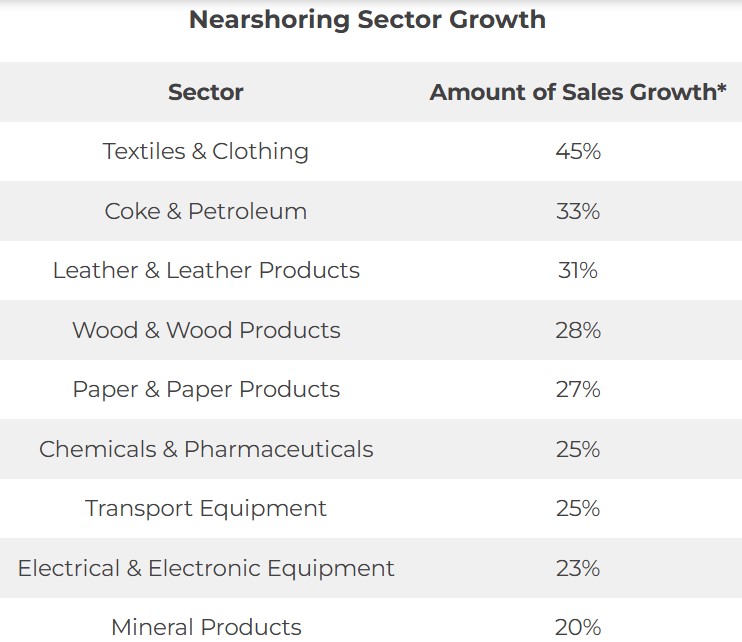
Although its cost savings may be limited, nearshoring affords parties similar time zones. This leads to improved real-time collaboration, smoother workflows, and faster decision-making—critical in fast-paced sectors
How To Adapt:
- Evaluate cultural compatibility: Choose a location with similar work culture and values to ensure smooth collaboration and fewer misunderstandings.
- Analyze political stability and infrastructure: Opt for regions with a stable political climate, strong legal systems, and reliable internet and telecommunications infrastructure.
- Set clear deliverables: Outline specific timelines, milestones, and expected outputs, for both digital services and physical goods.
Case In Point: A Canadian Company Outsourcing IT Support to Mexico
Nearshoring can apply to digital services as well. A Canadian IT services company recently turned to Mexico for IT support. The decision was driven by the need for more efficient collaboration between the Canadian headquarters and its logistics team.
By outsourcing to Mexico, the company was able to increase operational flexibility. Being able to quickly coordinate with the team in Mexico meant that projects could move faster, and the company could be more agile.
Nearshoring allowed for improved IT support services while also boosting its bottom line.
Trend 7: What Is a Hybrid Outsourcing Model?
A hybrid outsourcing model combines both onshore (in-house) and offshore teams to create a flexible and efficient system. It allows businesses to blend the best of both worlds: leveraging the cost-effectiveness and specialized skills of offshore teams while retaining control of strategic, client-facing roles with their local, onshore staff. This model enables each piece of the business to fit into a broader strategy, with teams complementing each other’s strengths.
The adoption of these models is accelerating. According to a 2024 Gartner study, 62% of companies that use a hybrid model report better adaptability. Another study found that 66% of finance organizations are incorporating a hybrid model to improve agility and resilience.
How Can Businesses Adapt to This Trend?
To successfully implement a hybrid outsourcing model and achieve high Expertise and Trustworthiness, businesses should take the following steps:
- Assess Core vs. Non-Core Functions: Identify which business functions are central to your company’s value proposition. Strategic functions like R&D and product development should remain in-house. Outsource non-core tasks such as customer service, IT support, or administrative tasks, which can be handled efficiently and at a lower cost by an offshore team.
- Establish Clear Communication Protocols: Develop structured communication processes to ensure seamless collaboration between in-house and outsourced teams. This includes using project management tools, regular video meetings, and clear reporting channels to prevent miscommunication and ensure accountability.
- Define Roles and Responsibilities: Clearly define the roles and responsibilities of both internal and external teams to prevent overlap and ensure accountability. Specify who is responsible for key deliverables and who has final decision-making authority.
What is a Real-World Example of a Hybrid Model in Action?
A tech company specializing in software development successfully adopted a hybrid outsourcing model to improve its product delivery cycle. The company integrated an offshore development team based in Eastern Europe with an in-house Quality Assurance (QA) team located in the U.S.
Here is how the hybrid model worked for them:
- Development: The company outsourced its software development to a talented team in Eastern Europe, taking advantage of significantly lower labor costs.
- Quality Assurance (QA): The in-house QA team in the U.S. was responsible for ensuring product quality. By having the development work done offshore, the QA team could focus entirely on testing and fine-tuning without being involved in the initial development phase.
By combining these two specialized teams, the company achieved a faster product development cycle, reduced costs, and maintained the high-quality products its customers expected. This case highlights how a hybrid model can strategically balance cost-effectiveness with a commitment to Trustworthiness and quality.

Trend 8: How Does Outsourcing Help Businesses Manage Uncertainty?
Markets are unpredictable, and businesses, especially startups with limited budgets, must quickly adapt to external changes. Outsourcing serves as a critical tool for flexibility, allowing companies to adjust to changing market conditions by scaling operations up or down as needed. This agility helps businesses avoid the financial burden of long-term commitments and navigate economic downturns or periods of rapid growth without a significant hiring or layoff process.
According to a Deloitte study, 40% of companies gained the flexibility to adapt through outsourcing. This approach transforms fixed costs like salaries and overhead into variable costs, providing crucial financial stability during an economic downturn.
What Are Notable Industries Using This Strategy?
Several industries have adopted outsourcing as a key strategy for scalability, leveraging it to manage fluctuating demand and maintain a high level of Trustworthiness with customers.
- Healthcare: With the rapid rise of telemedicine, healthcare providers are outsourcing functions like medical billing, administrative support, and even patient scheduling to manage surges in demand, particularly during health crises. The U.S. healthcare outsourcing market is projected to reach $66 billion by 2025 (MicroSourcing), highlighting its role in enabling rapid scalability.
- E-Commerce: The e-commerce industry relies heavily on outsourcing to scale quickly during peak seasons like Black Friday or the holiday shopping rush. By outsourcing customer support and order fulfillment, companies can handle a massive influx of orders and inquiries without overstaffing.
- Fintech: Fintech companies are often at the mercy of market conditions and regulatory changes. Many are now turning to outsourcing back office to the Philippines to efficiently manage compliance-related tasks and administrative functions without incurring long-term staffing costs. This ensures expertise, flexibility, and regulatory compliance while remaining agile.
How Can Businesses Adapt to This Trend?
To effectively use outsourcing as a foil for uncertainty, businesses should:
- Monitor Industry and Economic Trends: Stay informed about economic changes that may affect your business and adjust your outsourcing strategy accordingly.
- Develop Contingency Plans: Work with your outsourcing partners to establish clear protocols for maintaining operations during disruptions like economic downturns or supply chain issues.
- Diversify Outsourcing Partners: Avoid relying on a single provider for all outsourced functions. Building a network of multiple partners ensures you have backup options if one is unable to meet your needs during challenging times.
What Is a Real-World Example of This in Action?
A telemedicine provider needed to quickly scale operations to meet a surge in patient demand. To handle the increased volume, the company outsourced several backend operations, including technical and administrative support. An offshore team was hired to handle a high volume of technical issues, appointment scheduling, and data entry.
By offloading these non-core tasks, the telemedicine provider was able to rapidly scale up without compromising service quality. As demand normalized, the company simply scaled down its outsourced team, demonstrating the agility and cost-effectiveness of using outsourcing to navigate market uncertainty.
The telemedicine provider was able to rapidly scale up without compromising service quality or customer experience. And, as the demand eventually normalized, the company simply scaled down and made adjustments as needed.
So these are the 8 trends that are shaping how outsourcing is practiced around the globe. But perhaps the most important trend is the fact that outsourcing has ceased to become an option.
It has become an absolute necessity for businesses that seek to master and respond to all the economic, political, and social changes that beset every enterprise.
FAQs
What is the projected value of the global outsourcing market in 2025?
The global outsourcing market is projected to reach $410 billion in 2025.
How is AI impacting the outsourcing industry?
AI is collaborating with human expertise to transform business operations. It automates repetitive tasks, which reduces costs and improves efficiency.
What is nearshoring, and why is it a growing trend?
Nearshoring is the practice of outsourcing tasks to countries that are geographically close. It is gaining popularity because it offers the benefits of geographical proximity, similar time zones, and smoother collaboration compared to offshoring to distant countries.
How can small businesses benefit from outsourcing?
Tailored outsourcing solutions for small businesses and startups provide them with access to specialized talent and resources that would otherwise be out of their reach. This allows them to compete more effectively with larger companies.
Why is cybersecurity a major concern in outsourcing?
With the rise of remote work and the sharing of sensitive data, cybersecurity has become a critical concern. Businesses need to ensure that their outsourcing partners have robust security measures and compliance certifications to protect confidential information.
What is the difference between a traditional outsourcing model and a hybrid model?
A traditional model typically involves either onshore or offshore teams. A hybrid outsourcing model combines both onshore and offshore teams to achieve greater flexibility and efficiency.
How does outsourcing help businesses manage economic uncertainty?
Outsourcing acts as a tool for managing uncertainty by allowing companies to scale their operations up or down quickly. This flexibility enables them to respond to changing economic conditions and market demands without the burden of long-term staffing commitments.
Outsourcing can often mean success or failure and these 8 trends will continue to shape how enterprises approach growth, collaboration, competition, and innovation.
If you’re interested in possibly leveraging these trends for your business, contact Kinetic Innovative Staffing to know what options are available for your sector and business.
Kinetic Innovative Staffing has been supporting businesses across Asia Pacific, North America, the Middle East, and Europe with highly skilled remote professionals from the Philippines since 2013. Contact us today to discover how we can support your team.