
Did you know that 75-85% of construction projects experience delays or miss their deadlines?
These delays drive up costs, often pushing construction companies to the brink.
On top of that, the space is grappling with a severe talent shortage. In the U.S. alone, the industry faces a shortage of over 500,000 skilled workers.
To tackle these issues, construction firms are embracing a new strategy: integrating offshore architects and engineers into their teams.
This shift allows them to access skilled professionals at lower costs and meet client expectations in a competitive industry.
The following sections will unpack how offshore talent is redefining construction and offering practical solutions to growing challenges.
I. Offshore Architects and Engineers: A Game-Changing Solution

By tapping into the global talent pool through engineering services outsourcing in the Philippines, construction firms gain access to top-tier architectural and engineering services at a fraction of the local cost—offering flexibility while upholding international standards.
Here’s how offshore professionals are transforming the construction process:
-
Access to Diverse Design and Engineering Expertise
Companies now choose from professionals worldwide, many of whom bring specialized skills in diverse architectural styles and unique engineering approaches.
For instance, a U.S.-based construction company might enlist an offshore engineering team to handle complex structural and sustainability requirements. By expanding their search beyond local markets, firms gain access to unique expertise that can enhance project quality and offer fresh approaches and ideas to clients.
-
Gain Expertise Without Breaking the Bank
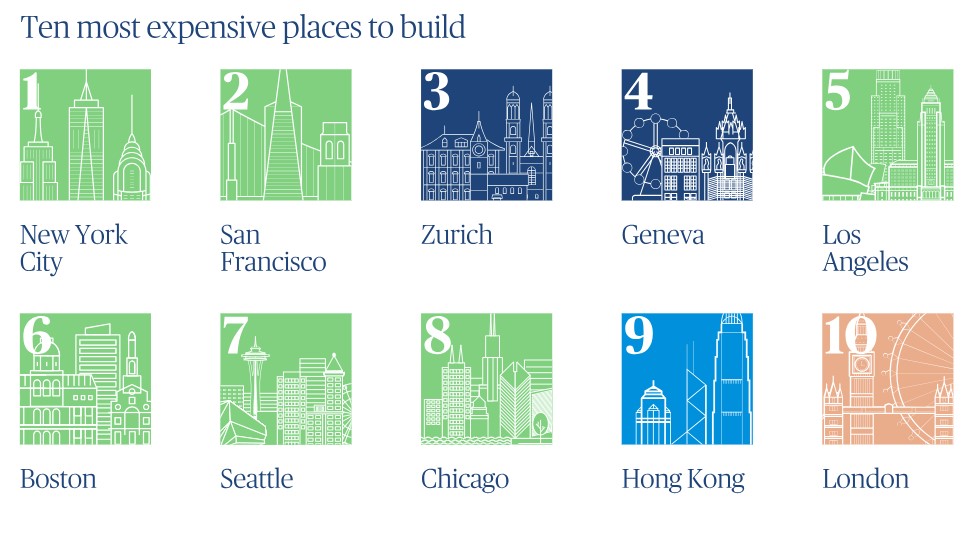
Source: www.turnerandtownsend.com In a 2024, Turner & Townsend survey, 6 of the top 10 most expensive places to build are in the U.S. A confluence of inflationary pressures, reduced credit availability, high labor rates, and tight capital markets all add up.
Any savings can make construction companies much more competitive in the market.
Offshore outsourcing brings in those savings.
On average, construction companies save around 65% in labor expenses by hiring offshore engineers—enabling them to reallocate funds for other critical project components, such as higher-grade materials, cutting-edge technology, or even additional projects.
In places like Southeast Asia, the hourly rates for highly skilled architectural and engineering talent are substantially lower, allowing companies to control their costs while staying competitive.
For instance, a small U.S. firm saved $300,000 annually by hiring offshore engineers, allowing them to bid competitively on larger projects.
-
Perform Engineering Tasks Remotely
Project management tools enable offshore teams to collaborate with on-site staff. Offshore architects and engineers can work on architectural blueprints, conduct 3D modeling, or perform structural analyses remotely, while on-site teams execute the plans.
For example, a firm working on a large-scale residential project can rely on an offshore team for the initial design phase and expand or reduce that team as the project progresses.
By leveraging offshore talent, construction companies are able to enhance efficiency and meet deadlines and demands.
II. The Role of Offshore Architects and Engineers in Modern Construction
What Roles Can Offshore Architects and Engineers Fill?
Offshore professionals can take on a variety of essential roles in modern construction. By integrating these remote teams, companies can gain a competitive advantage by streamlining core processes, from initial design to final project management.
- Design and Drafting Services Offshore architects and engineers can manage core design tasks, including drafting blueprints and producing precise computer-aided designs (CAD). These services are essential for residential, commercial, and industrial projects. By remotely outsourcing these tasks, construction companies can access specialized design expertise without the financial burden of housing and relocating on-site staff.
- Case in Point: A large-scale commercial project in California was struggling with project delays due to constant design revisions. The firm partnered with an offshore team in the Philippines to handle all CAD drawings. As a result, the offshore team delivered fully detailed drawings for each project phase, reducing design revision cycles by 40% and allowing the on-site crew to proceed with fewer interruptions.
- Engineering Support Offshore engineers can provide valuable support, helping firms navigate the technical challenges of construction. Their input can help with everything from ensuring building stability to optimizing material use. This additional analysis helps teams execute projects safely and cost-effectively.
- Case in Point: A European infrastructure company sought to refine structural specifications for a new bridge. By employing an offshore structural engineering team, they were able to perform advanced load-bearing calculations, which not only improved project safety standards by 20% but also cut down on material costs by 15%.
- Specialized Subject-Matter Expertise Unique construction projects often require expertise that is not available locally. Offshore architects and engineers who specialize in niche fields can provide assistance without having to be physically present on the job site. This is particularly valuable for projects that aim to achieve unique certifications or use innovative building methods.
- Case in Point: An Australian construction company partnered with an offshore team specializing in sustainable design. Together, they developed energy-efficient building plans, which resulted in the project earning a coveted green certification, adding significant value to the property.
- Project Management and Coordination Many offshore professionals are trained to work closely with on-site teams, overseeing progress and providing revisions. This enables real-time collaboration that drives project efficiency.
- Case in Point: A U.S.-based company utilized an offshore project management team to oversee the design phase of a retail complex. This strategic move resulted in the project staying on schedule and reducing the need for costly rework by 25%, as all parties were coordinated from a single, centralized platform.
III. Speed & Savings: Intersecting Values

Efficiency and controlling costs do not ordinarily go hand-in-hand—especially in construction. One either spends for speed or saves and slows down. But by tapping offshore engineering teams, one reduces delays and costs.
Here’s how offshore professionals can help construction firms streamline their budgets and timelines:
Speed
Strategically having offshore engineers in different time zones can help ensure that construction companies keep their projects moving continuously—with offshore teams tackling critical tasks while the on-site team is offline.
This “follow the sun” model minimizes downtime and accelerates work cycles.
It also creates a buffer for revisions and troubleshooting. For example, a U.S.-based construction company partnered with engineers in the Philippines can have their offshore team review and finalize structural designs overnight, allowing the on-site team to resume work the next morning without delay.
Offshore engineering solutions are transforming project timelines in construction, reducing delays through a round-the-clock work cycle, faster turnarounds, and rapid revisions.
Savings
In construction, every dollar counts.
Delays cost dollars—practically and contractually.
By keeping to an efficient work cycle, projects save on unnecessary expenses. But that is just one of the ways companies save.
Offshore architects and engineers in countries like the Philippines offer the same level of expertise but at a fraction of the cost.
According to Glassdoor.com, the pay for a civil engineer starts at $87,000 and can go as high as $169,000.
By comparison, a highly-skilled Philippine engineer costs around $30,000. Saving companies around 65%.
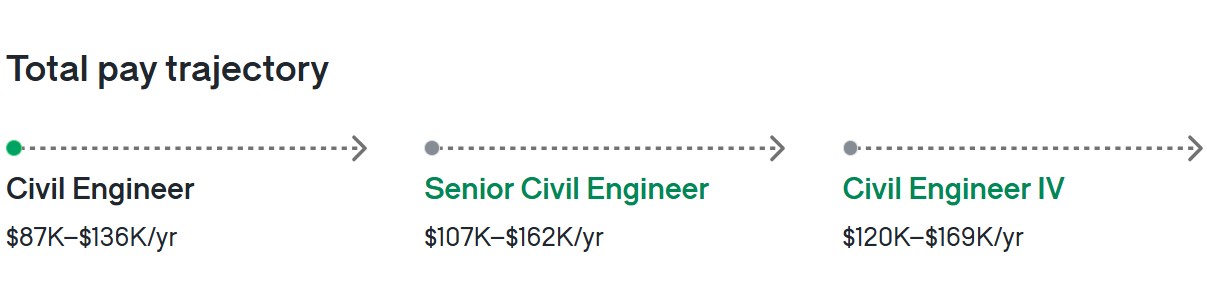
Similar figures operate for architects. An experienced offshore architect is more cost-efficient than hiring locally.
Additionally, with an offshore workforce, companies also forgo the high expenses associated with office space, utilities, and equipment for on-site staff.
Offshore employees typically work remotely, using their own equipment, which eliminates the need for investments in additional workstations.
A U.S.-based construction firm, for instance, saved over $500,000 annually by shifting its drafting and design teams to an offshore model, reducing office overhead and tech support requirements.
Offshoring delivers significant financial advantages. By cutting expenses, businesses can improve profitability and gain a competitive edge in a cost-intensive industry.
Hiring offshore architects and engineers is a proven way to reduce costs, but construction roles extend far beyond these two. In fact, one particularly impactful role in a project’s budget is the estimator.
We’ll devote a special section to learning about estimators, and how hiring skilled offshore estimators, like engineers and architects, can boost the profitability of construction companies.
IV. Cost Estimators: Reducing Expenses & Driving Efficiency
Why is Accurate Cost Estimation the Backbone of a Project? 💰
Accurate cost estimation is crucial for a project’s success, preventing financial strain and delays. Studies consistently show a high rate of budget overruns, which underscores the importance of a well-prepared estimate.
- A 2024 analysis reveals that 9 out of 10 construction projects experience cost overruns, with an average overrun of 28%.
- Research from the Project Management Institute (PMI) indicates that only 35% of construction projects are completed on time and within budget.
- McKinsey & Company’s research into megaprojects found that 98% of them face cost overruns of more than 30%, with an average overrun of 80%.
What a Construction Cost Estimator Does:
A construction cost estimator is the financial planner for a project. They calculate anticipated expenses, including materials, labor, and equipment, providing clients with a clear understanding of a project’s total cost before it begins.
What Are the Common Challenges in Construction Estimation?
Many companies face persistent issues with estimation that lead to significant financial setbacks. These challenges highlight the need for specialized expertise to ensure accuracy.
- Labor Costs Miscalculation: A 2023 survey by Dodge Construction Network found that 45% of companies underestimated labor costs due to overlooked overtime and variations in skill levels.
- Material Price Fluctuations: The cost of materials, such as steel and concrete, increased by an average of 19% in 2022, adding unforeseen expenses to project budgets.
- Scope Creep: According to the Project Management Institute’s “Pulse of the Profession” report, 37% of projects face scope creep, which inflates costs and derails timelines.
- Site-Specific Challenges: Projects can lose 5-10% of their budgets due to unanticipated site conditions, such as poor soil quality or difficult terrain.
How Can Offshore Cost Estimators Drive Efficiency and Reduce Costs?
Hiring offshore cost estimators provides an additional layer of savings and efficiency. This approach gives businesses the same advantages as hiring offshore engineers and architects.
- Significant Cost Savings: Offshore estimators can reduce labor expenses by up to 60%, according to a Deloitte Global Outsourcing Survey. This enables companies to stay competitive without compromising on the quality of their estimates.
- Access to Advanced Tools: Offshore professionals leverage the same industry-leading tools, such as Procore and BuildXact, ensuring accuracy and reliability.
- Round-the-Clock Productivity: With teams working in different time zones, projects can have continuous progress and faster turnaround times.
Case in Point: A U.S.-based construction firm saved $500,000 annually by outsourcing cost estimation. They used offshore professionals who were trained in local and international construction standards, allowing the company to reinvest the savings into expanding its operations.
V. The Philippine Advantage
Why Are Construction Companies Choosing the Philippines for Outsourcing?
The Philippines is a top choice for construction companies seeking to outsource due to its unique combination of a highly skilled workforce, strong English proficiency, and ideal cultural and time zone alignment. This strategic advantage enables businesses to access premium talent and drive projects forward efficiently. It’s why architectural outsourcing companies in the Philippines have become the go-to partner for construction firms across the U.S., Australia, and Europe.
How Does the Philippines’ Talent Pool Benefit Businesses?
The country has a substantial and growing pool of licensed professionals. This makes it an ideal destination for companies looking for specialized architectural and engineering talent.
- Vast Professional Roster: The Philippines boasts a significant number of licensed professionals. The country’s Professional Regulation Commission (PRC) has over 213,000 licensed engineers and around 50,000 licensed architects. These numbers show a deep and available talent pool for companies seeking high-caliber professionals.
- Globally Trained Workforce: Many of the country’s architects and engineers are educated at globally recognized institutions and trained in industry-standard practices, ensuring they bring a high level of expertise to any project.
Why is English Proficiency a Key Advantage?
Language barriers are a common challenge in outsourcing. The Philippines’ strong command of English minimizes these risks, ensuring clear and effective communication on complex projects.
- High Proficiency Ranking: The Philippines consistently ranks among the most English-proficient countries in the world. According to the 2024 English Proficiency Index, the country is ranked 22nd globally and 2nd in Asia, with a “High Proficiency” rating.
- Seamless Communication: This high level of proficiency is critical for remote collaboration, where precise instructions and frequent adjustments are the norm. Working with professionals who can fluently speak and understand English reduces the risk of miscommunication and ensures project details are handled with precision.
How Does Cultural Compatibility Support Collaboration?
The Philippines has a shared cultural foundation with many Western countries, which creates a harmonious environment for remote teamwork. This compatibility extends beyond language to shared values and work ethics.
- Shared Values: The Filipino cultural emphasis on respect, teamwork, and hospitality aligns closely with Western work cultures. This cultural fit helps to foster loyalty and camaraderie within teams, reducing friction and enhancing productivity.
- Adaptability: Filipinos are renowned for their ability to adapt to multicultural environments, making them valuable assets in international teams. This makes for a more seamless integration into existing company structures.
What is the Benefit of Time Zone Alignment?
The Philippines’ time zone offers a significant strategic advantage, enabling continuous workflow and faster project completion, especially for companies in the U.S., Europe, and Australia.
- Real-Time Collaboration: The Philippines’ time zone complements U.S. and Australian schedules, allowing for real-time collaboration during business hours without major adjustments.
- “Follow-the-Sun” Model: For European companies, the time zone difference is ideal for a “follow-the-sun” model. Tasks assigned at the end of a European workday can be completed by Filipino teams overnight, ensuring a continuous 24-hour work cycle that can significantly reduce project timelines. This model increases productivity by eliminating the downtime of traditional workdays.
VI. Mitigating Risks and Ensuring Quality with Offshore Teams

Partnering with offshore teams offers significant benefits, but it also has risks that need to be managed proactively. Here’s how companies can address common concerns and ensure a successful collaboration.
Strategies for Maintaining Quality Control
Establish clear quality control protocols. By creating standardized workflows, companies can set clear guidelines for everyone to follow. This includes:
- Implementing structured protocols for tasks like design drafts, structural analyses, and construction documentation.
- Scheduling regular quality checks throughout each project phase, so any issues are identified early and corrected promptly.
- Designating internal and external review stages to verify that all work produced by offshore teams aligns with local and company standards.
- Conducting regular quality reviews to give offshore teams valuable feedback, ensuring continuous improvement.
Strategies for Minimizing Miscommunication
Communication breakdowns can quickly derail project timelines and affect the final quality of deliverables. To reduce these risks, companies should:
- Provide detailed project requirements, objectives, timelines, and expectations.
- Emphasize technical specifications and any relevant design or engineering codes that need to be met.
- Establish communication protocols that outline channels for reporting progress, submitting deliverables, and addressing questions.
- Have regular check-ins, either weekly or bi-weekly, to provide an opportunity to address questions, clarify objectives, and update timelines. (Encourage offshore teams to bring up any potential challenges in these meetings, and maintain open channels for real-time communication.)
- Use project management tools like Asana and Trello. These platforms enhance collaboration by streamlining task assignments, enabling real-time progress tracking, and facilitating communication across different time zones.
Strategies for Consistent Compliance
To reduce liability and avoid costly mistakes, companies must ensure that offshore teams understand and follow all relevant legal requirements. Key steps include:
- Vetting offshore partners’ familiarity with local construction codes and safety standards applicable to each project.
- Providing offshore staff with access to training on any specific regulations or compliance issues that may be unique to the project’s location.
- Hiring local advisors or consultants who can serve as compliance liaisons between offshore teams and on-site teams.
- Drafting contracts that specify adherence to all applicable legal standards, establishing accountability for any non-compliance issues that arise.
VII. Case Study: Streamlining Residential Development

What Is the Texas Firm’s Case Study on Outsourcing?
In 2023, a small, family-run firm in Texas that specializes in affordable, eco-friendly homes faced a challenge. Demand for green housing had surged, and their small in-house team couldn’t keep up. To scale their operations without compromising on quality or affordability, the company decided to outsource specific engineering tasks to a team in the Philippines.
How Did the Company Implement Outsourcing?
The company took a phased approach to integrate the offshore team, focusing on effective collaboration and clear communication.
- Partner Selection: The firm chose an outsourcing provider with a proven track record in residential design for Western clients. This ensured they could rely on the provider’s expertise and authoritativeness.
- Phased Onboarding: The Filipino engineers initially handled 3D renderings and structural calculations. Over time, they took on more complex tasks, like optimizing designs for solar energy and ensuring compliance with U.S. residential building codes.
- Technology Integration: They used shared platforms like AutoCAD 360 and BIM360 to enable real-time collaboration, ensuring seamless design iterations and reducing miscommunication.
What Were the Quantifiable Results of the Outsourcing?
The collaboration proved to be a game-changer for the company, providing several measurable benefits that directly addressed their initial challenges.
- Cost Reduction: The firm achieved a 60% reduction in design and engineering labor costs, which allowed them to keep their homes competitively priced.
- Faster Project Timelines: By leveraging the offshore team’s expertise and different time zones, the company was able to accelerate design revisions and reduce project completion times by 25%.
- Enhanced Innovation: The outsourced engineers provided creative solutions, such as solar panel layouts that optimized energy output and saved the company over $200,000 in material costs on a single 50-unit housing project.
By integrating offshore talent, the company not only met the increased market demand but also expanded its reputation as a leader in sustainable housing, proving that outsourcing can be a key driver for both efficiency and innovation.
For construction businesses seeking efficiency, innovation, and affordability, this case study underscores the potential of tapping into the rich talent pool in the Philippines.
More and more businesses discover the advantages of offshore talent, with those embracing the model—such as companies that outsource engineering services to the Philippines—not only lowering costs but also enhancing their ability to compete, innovate, and adapt to market conditions.
Frequently Asked Questions about Offshore Architects and Engineers
Q: What roles can offshore architects and engineers fill?
A: Offshore professionals can handle various essential roles, from core design and drafting to specialized engineering and project management. They provide crucial support for tasks like creating precise blueprints, producing CAD drawings, refining structural specifications, and managing project timelines, enabling on-site teams to work more efficiently.
Q: What are the main benefits of using offshore professionals?
A: Outsourcing to offshore architects and engineers offers significant advantages, including cost reduction, access to a larger pool of talent, enhanced innovation, and faster project timelines. This model allows for a continuous “follow-the-sun” workflow, which can dramatically accelerate project completion by eliminating downtime.
Q: How does outsourcing to the Philippines offer a strategic advantage?
A: The Philippines has become a top choice for outsourcing due to its highly skilled and professionally trained workforce. The country has a vast number of licensed architects and engineers. Filipinos also have high English proficiency and a culturally compatible work ethic, which minimizes communication barriers and promotes seamless teamwork. The time zone alignment also allows for real-time collaboration with teams in the U.S., Europe, and Australia.
Q: Can offshore professionals help with cost estimation?
A: Yes. Offshore cost estimators can reduce labor expenses by up to 60%, helping companies maintain competitive pricing and improve profit margins. They are proficient in industry-leading tools like Procore and BuildXact, ensuring accuracy and helping to prevent budget overruns and delays caused by common challenges like miscalculating labor costs or fluctuating material prices.
Q: How do you ensure quality and clear communication with an offshore team?
A: Success with offshore teams relies on effective implementation. This includes using a phased onboarding approach, integrating shared technology platforms (e.g., AutoCAD 360 and BIM360) for real-time collaboration, and establishing clear communication protocols. Building rapport through virtual meetups and training on specific building codes helps ensure alignment and high-quality results.
Kinetic Innovative Staffing is your partner in hiring top-notch engineering and architectural talent. By outsourcing with Kinetic, you can leverage that expertise and insights into the Philippine talent pool.
Get in touch with Kinetic Innovative Staffing for a free consultation.
Kinetic Innovative Staffing has been supporting businesses across Asia Pacific, North America, the Middle East, and Europe with highly skilled remote professionals from the Philippines since 2013. Contact us today to discover how we can support your team.