
The short answer
Three of the world’s most successful graphic design companies, Canva, 99designs, and DesignCrowd, share one strategic advantage: a deep talent pipeline from the Philippines. Each has independently built significant operations or designer communities there, not by coincidence, but because Filipino creative professionals consistently deliver high-quality, versatile design work at globally competitive rates.
For Australian businesses, this same talent pool is directly accessible through remote staffing at a fraction of the cost of a local hire.
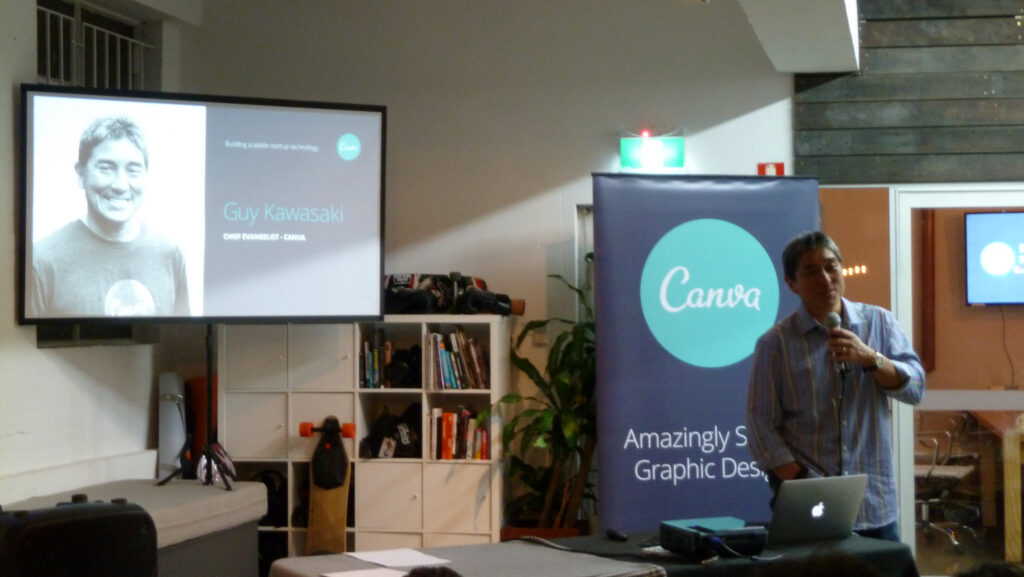
Australia’s graphic design industry is going global
Australia has quietly become a world leader in the graphic design platform space. Three companies in particular have reshaped how businesses and individuals access creative services, and all three have found their edge in the Philippines.
Canva, founded in Perth in 2012 by Melanie Perkins, is a cloud-based graphic design platform built around a drag-and-drop interface that makes professional design accessible to non-designers. Key figures as of 2025/2026:
- 230 million+ monthly active users across 190 countries (Canva Newsroom, 2025)
- US$49 billion valuation confirmed at its secondary share sale in early 2025, making it one of the most valuable private technology companies globally
- Used by approximately 90% of Fortune 500 companies (Canva Newsroom, 2025)
- 20 billion+ designs created on the platform to date (Canva Newsroom, 2025)
- Ranked among Australia’s top technology exports by the Australian Tech Council, 2025
99designs, headquartered in Melbourne and part of the Vistaprint/Vista group since 2021, is a crowdsourced design marketplace connecting clients with freelance designers for logo creation, brand identity, packaging, and web design. By the numbers:
- 650,000+ customers served globally (Vista/99designs, 2025)
- US$250 million+ paid out to freelance designers worldwide
- Active designer community spanning 90+ countries (Source: 99designs/Vista company communications, 2025)
DesignCrowd, founded in Sydney in 2008, is a competing freelance design marketplace with a strong Asia-Pacific presence:
- 350,000+ projects completed to date
- A$50 million+ in cumulative revenues generated
- Designer community registered across 50+ countries (Source: DesignCrowd company profile, 2025)
What these three share beyond their Australian origins is a strategic, sustained reliance on Filipino creative professionals.
The Philippines: a quietly dominant force in global graphic design
How each platform connects to Filipino talent
Canva operates a Manila office that has grown to over 150 employees as of 2025, one of its largest offices outside Sydney. A significant portion of the platform’s design templates is curated and produced by this Manila-based team. For a company valued at nearly US$50 billion, its sustained and growing investment in Philippine operations is a clear signal about the depth of creative talent available there.
99designs counts the Philippines among its top five designer communities globally. Filipino designers account for nearly 20% of all registered designers on the platform, one of the highest national concentrations in its marketplace. (Source: 99designs community data.)
DesignCrowd lists the Philippines among the top six countries by registered designer volume and maintains one of its three global offices in Manila, alongside Sydney and San Francisco. The Manila office is not a back-office function; it operates at the same level as the company’s two primary Western-market offices.
The Philippines outsourcing sector: 2025/2026 figures
The Philippines is not just a design talent hub. It is one of the world’s most established and fastest-growing outsourcing economies:
- The Philippine IT-BPM (IT and Business Process Management) industry generated US$38.9 billion in revenue in 2025, ahead of its 2028 roadmap target (IBPAP Industry Roadmap 2028, updated 2025)
- The sector now directly employs ~2.0 million workers, with creative and knowledge services among the fastest-growing segments (IBPAP, 2025)
- The Philippines ranks 2nd globally for English proficiency among Asian countries, with a literacy rate of 98.3% (EF English Proficiency Index, 2025)
- Filipino workers in creative fields complete an average of 4 years of tertiary education, commonly in Fine Arts, Multimedia Arts, or Graphic Design at CHED-accredited universities
- The country produces approximately 550,000 college graduates per year, with arts, design, and ICT programmes accounting for a growing share (CHED Annual Report, 2025)
- 78% of outsourcing clients report being satisfied or very satisfied with the quality of output from Filipino remote workers (Outsource Accelerator Global Survey, 2025)
- The Philippines accounts for 15% of the global BPO market, second only to India (Tholons Global Innovation Index, 2025)
For Australian businesses exploring offshore staffing solutions, these macro indicators matter: they reflect a deep, mature, and quality-oriented labour market, not a low-cost shortcut.
Why Filipino graphic designers are in such high demand
The Philippines’ rise as a creative hub is rooted in a genuinely distinctive cultural history. Over four centuries of Spanish, American, and Japanese colonial influence, layered over indigenous artistic traditions, produced a culture positioned uniquely at the intersection of Western and Asian aesthetics.
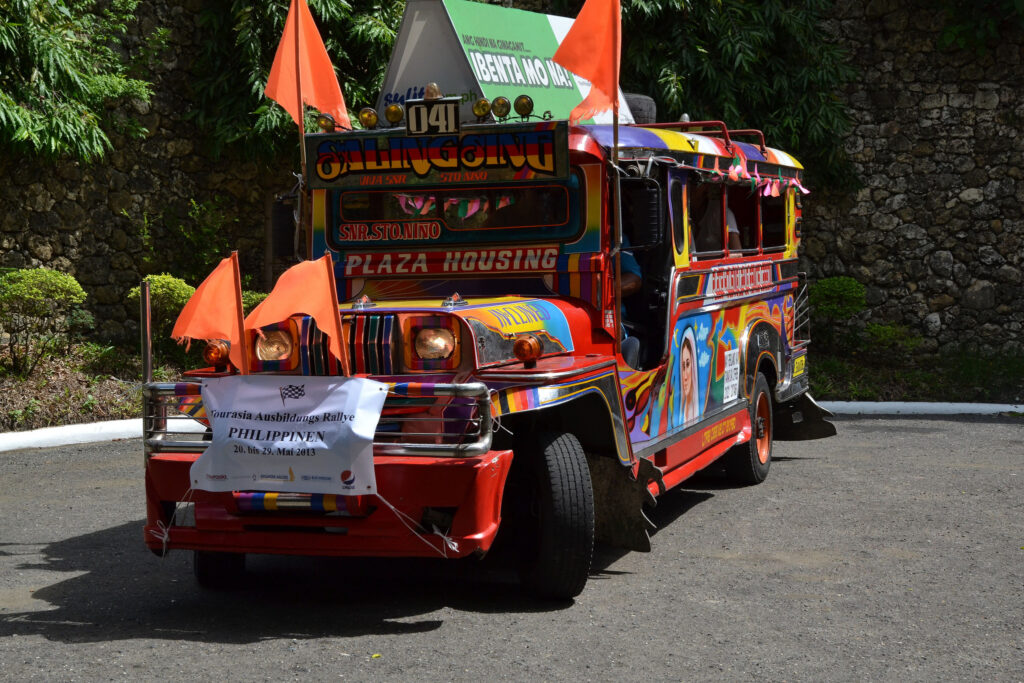
This history is visible in everyday Filipino design. The jeepney, for example, began as a repurposed American military Willys Jeep and evolved into a boldly decorated icon of Filipino street culture, blending European religious imagery, Asian ornamentation, and local craftsmanship into something entirely original. This kind of aesthetic synthesis, absorbing multiple traditions and producing something new, is characteristic of Filipino creative output broadly.
The result is a designer community with an exceptionally wide stylistic range: equally at home with minimalist Western corporate branding, vibrant Southeast Asian illustration, editorial typography, and motion design.
A thriving local design ecosystem
The Philippines has one of Southeast Asia’s most active graphic design communities:
- The annual Graphic Expo Manila, running since 1996, attracts 15,000+ design professionals and students per year as of its most recent editions.
- The Davao Graphic Designers Community (DGDC) has grown to over 3,000 members and continues to host major regional design conventions annually.
- Filipino designers consistently rank among the top earners per project on Upwork and 99designs in the Asia-Pacific region, reflecting demand for quality as much as volume.
- The Philippines placed 4th globally in Upwork’s Creative and Design talent rankings in 2025 (Upwork Talent Report, 2025)
Filipino designers have also earned global recognition:
- Lucille Tenazas is Associate Dean and Henry Wolf Professor at Parsons School of Design in New York, former President of the American Institute of Graphic Arts (AIGA, 1996 to 1998), Cooper-Hewitt National Design Award recipient (2002), and AIGA Medal recipient (2013). Learn more
- Floro Dery was the visual creator of The Transformers and The Amazing Spider-Man animated series and comics in the 1980s, two of the most commercially successful animated franchises in history.
- Ronnie del Carmen co-directed and co-wrote Pixar’s Inside Out (2015, Academy Award winner for Best Animated Feature) and contributed visual development work on Up, WALL-E, Ratatouille, Finding Nemo, and Monsters University.
- Brian Montes is the freelance designer whose entry beat 4,000+ submissions in a 99designs contest to redesign the cover of The Purpose Driven Life by Rick Warren, one of the best-selling non-fiction books of all time.
What this means for Australian businesses
The cost case for hiring remote Filipino graphic designers
The talent that powers billion-dollar design platforms is directly accessible to Australian SMEs and enterprises. The economics are compelling:
| Local Australian designer | Remote Filipino designer | |
| Average annual salary | A$65,000 to A$78,000 | A$20,000 to A$24,000 |
| Superannuation (11.5%) | A$7,475 to A$8,970 | Not applicable |
| Leave entitlements (est.) | A$5,500 to A$6,500 | Managed by a staffing provider |
| Recruitment fees (est.) | A$8,000 to A$15,000 | Included in the staffing service |
| Effective annual cost | ~A$86,000 to A$108,000 | ~A$22,000 to A$28,000 |
| Saving | Up to 75% |
(Sources: Seek.com.au Graphic Designer Salary Guide 2025; PayScale Australia 2025; ATO superannuation rate 2025/2026.)
These are not junior or commodity roles. Remote graphic designers from the Philippines working for Australian firms routinely hold:
- Bachelor’s degrees in Fine Arts, Multimedia Arts, or Graphic Design from CHED-accredited universities
- Professional proficiency in Adobe Creative Suite, Figma, and Canva Pro
- 3 to 7 years of experience serving international clients
- Strong written and spoken English (the Philippines is the world’s third-largest English-speaking population)
What Australian businesses are outsourcing to Filipino designers
Based on Kinetic’s placements across 200+ Australian client businesses since 2013, the most common design functions handled remotely include:
- Social media design: ongoing graphics for Instagram, LinkedIn, Facebook, and TikTok campaigns
- Brand identity and marketing collateral: logos, style guides, brochures, presentations, and email templates
- Web and UI design support: landing pages, banners, web graphics, and Figma mockups
- Digital marketing assets: display ads, video thumbnails, EDM design, and paid social creatives
- Print design: packaging, signage, trade show materials, and catalogues
- Template creation and management: building and maintaining Canva or Adobe template libraries for internal teams
Is remote staffing right for your business?
Businesses that hire remote graphic designers often find this works particularly well because the work is inherently digital and deliverable-based, making timezone and location largely irrelevant to output quality. Philippine working hours also overlap partially with Australian east coast business hours (AEST/AEDT), which simplifies briefing and review cycles.
It is a strong fit for businesses that:
- Have recurring, volume design needs rather than one-off projects
- Want a dedicated team member rather than a per-project freelancer
- Are you looking to scale a creative team without proportional headcount cost growth
- Need someone embedded in their brand, tools, and workflow over time
It requires more management investment for roles involving frequent in-person collaboration, physical product handling, or spontaneous creative whiteboarding sessions.
Frequently asked questions
Why do Canva, 99designs, and DesignCrowd all use Filipino designers? The Philippines offers a rare combination: Western and Asian aesthetic fluency, strong English proficiency, a large pool of formally trained design graduates, and competitive salary expectations. All three platforms arrived at this conclusion independently, which is itself a strong validation of the talent pool’s quality.
Are Filipino graphic designers qualified for professional Australian-standard work? Yes. Many hold four-year Fine Arts or Graphic Design degrees from accredited Philippine universities, including the University of Santo Tomas, De La Salle University, and the University of the Philippines. The local freelance market is highly competitive, and designers serving international clients typically have 3 to 7 years of relevant experience.
How much does it cost to hire a remote Filipino graphic designer? The all-in annual cost (including staffing provider fees) typically ranges from A$22,000 to A$28,000, compared to A$86,000 to A$108,000 for an equivalent local hire when salary, super, leave, and recruitment are factored in. That is a saving of approximately 70 to 76%. See our pricing page for current rates.
How does Kinetic manage the staffing process? Kinetic Innovative Staffing handles sourcing, vetting, compliance, payroll, and HR in the Philippines. The client manages day-to-day work and direction.
What tools do Filipino remote designers commonly use? Adobe Illustrator, Photoshop, InDesign, Figma, After Effects, and Canva Pro are all standard. Most candidates are also proficient in project management and communication tools, including Asana, Trello, Monday.com, Slack, and Loom.
How quickly can I hire a remote Filipino designer through Kinetic? Most placements are completed within 2 to 4 weeks from initial brief to candidate start date. Get in touch to discuss your requirements.
Ready to build your remote design team?
More than 200 Australian businesses have used Kinetic Innovative Staffing to build remote teams in the Philippines, the same talent market that powers Canva, 99designs, and DesignCrowd.
Explore our remote graphic designer service, or browse related roles:
- Remote marketing staff: content writers, SEO specialists, social media managers
- Remote web developers: front-end, back-end, and full-stack
- Remote virtual assistants: administrative, executive, and operations support
- Remote accounting staff: bookkeepers, accounts payable/receivable, management accountants